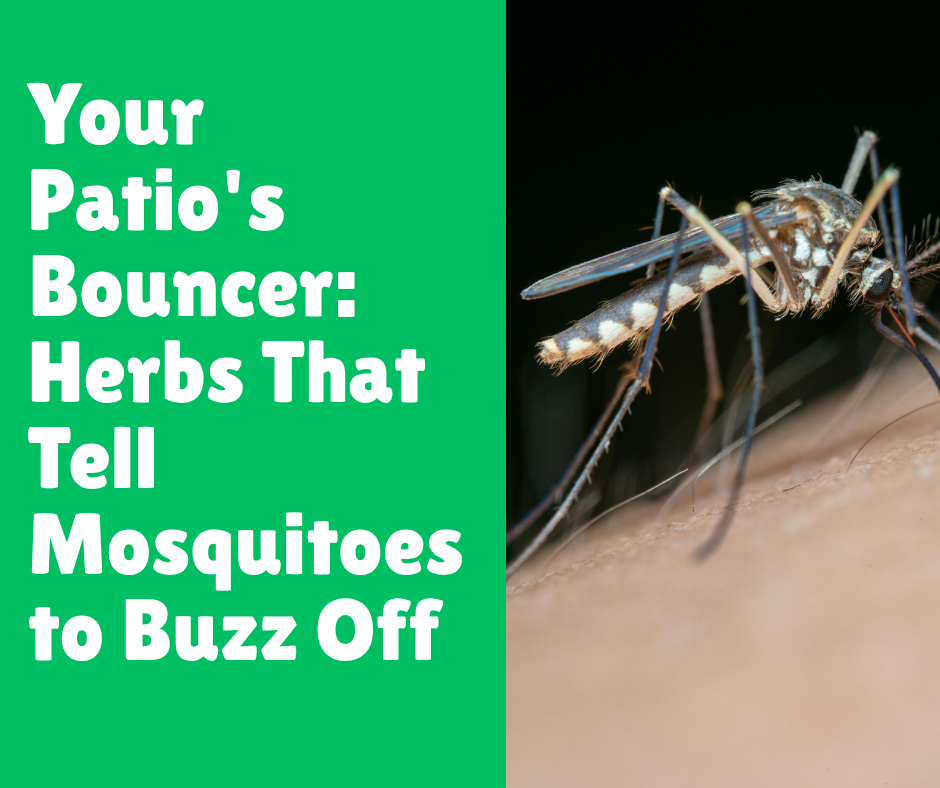
Your Patio’s Bouncer: Herbs That Tell Mosquitoes to Buzz Off
Post Disclaimer
Content on this site is for educational use only and not a substitute for medical advice. Herbal remedies are based on traditional knowledge and not medical recommendations. Please consult a healthcare professional before trying any herb. We do not assume responsibility for any outcomes or adverse effects resulting from the use of information provided here.
I have a love-hate relationship with summer. I love the long, sunny days, the backyard barbecues, and the feeling of warm air on my skin. What I hate, with the fire of a thousand suns, are mosquitoes.
These tiny vampires seem to have a personal vendetta against me, turning what should be a peaceful evening on the patio into a frantic swatting and scratching session. For years, I doused myself in sticky, chemical-smelling sprays and lit citronella candles that seemed to do little more than scent the air.
Then, I discovered a secret weapon that was hiding in plain sight: my herb garden. It turns out that many of the same plants I was already growing for my kitchen could pull double duty as a surprisingly effective mosquito defense system.
It felt like a total game-changer. Not only could I create a natural, fragrant barrier against these pests, but my outdoor space also looked and smelled incredible.
If you’re tired of being the main course at a mosquito buffet, you’ve come to the right place. We’re going to dive into the best herbs for repelling mosquitoes, how to plant and arrange them for maximum effect, and how to create your own all-natural repellents. Let’s turn your yard into a beautiful, mosquito-free sanctuary.
Building Your Aromatic Armor: The Top Mosquito-Repelling Herbs
Not all herbs are created equal in the fight against mosquitoes. Some are powerhouse repellents, while others are more of a mild deterrent. The key is to plant a variety of the most potent ones to create a multi-scented shield that mosquitoes simply can’t stand.
They navigate by scent, and when you overload their senses with smells they hate, they’ll happily move on to your neighbor’s less-fragrant yard. Sorry, neighbor.
Here are the heavy hitters you’ll want to recruit for your garden army.
1. Citronella Grass (Cymbopogonnardus)
Let’s start with the celebrity of the mosquito-repelling world. You’ve seen “citronella” on candles, torches, and sprays for a reason. Most of those products, however, use a synthetic version of the oil.
The real deal the Citronella Grass plant itself is far more effective. It has a strong, distinct lemony aroma that is the cornerstone of any anti-mosquito garden.
- Why it Works: Citronella contains compounds like citronellal, geraniol, and limonene. These powerful oils mask the scents that attract mosquitoes, like carbon dioxide and lactic acid from our breath and skin. Essentially, it makes you invisible to them.
- Growing Tips: Citronella Grass is a tropical plant, so it loves sun and heat. It thrives in large pots, which is great because it’s not winter-hardy in most US climates. You can bring it indoors during the colder months. Keep it well-watered, and give it plenty of space, as it can grow into a large, ornamental clump.
I keep two large pots of citronella grass flanking the steps to my deck. The simple act of walking past them and brushing against the leaves releases that wonderful lemon scent, refreshing the barrier all evening long.
2. Lemon Balm (Melissa officinalis)
A member of the mint family, Lemon Balm is another MVP. It’s incredibly easy to grow—almost too easy, some might say. It has a gentler, sweeter lemon scent than citronella, but it’s packed with the same mosquito-hating compounds.
- Why it Works: Like citronella, Lemon Balm is rich in citronellal. It releases its scent when the leaves are bruised or crushed.
- Growing Tips: Be warned: Lemon Balm is an enthusiastic grower and will take over your garden if you let it. I learned this the hard way when it staged a coup in one of my raised beds. Always plant it in a container unless you want a lemon-scented jungle. It prefers partial shade but will tolerate full sun if kept moist.
DIY Tip: Before you sit outside, grab a few lemon balm leaves, crush them in your hands, and rub them on your exposed skin (ankles, arms, neck). It’s a fantastic, all-natural, on-the-spot repellent. Plus, your hands will smell amazing.
3. Catnip (Nepetacataria)
Here’s a fun one. While it might drive your feline friends into a state of euphoric bliss, catnip has the opposite effect on mosquitoes. In fact, studies have shown that nepetalactone, the essential oil in catnip, is significantly more effective at repelling mosquitoes than DEET, the chemical found in most commercial insect repellents.
- Why it Works: The active ingredient, nepetalactone, is a powerful irritant to mosquitoes and many other insects. They want nothing to do with it.
- Growing Tips: Catnip is another member of the mint family, so container planting is your friend here, too. It’s a hardy perennial that loves full sun and well-drained soil. It’s incredibly low-maintenance. The only real maintenance is shooing away all the neighborhood cats that will suddenly find your patio very interesting.
4. Lavender (Lavandula)
Who doesn’t love the calming scent of lavender? Well, mosquitoes, for one. This beautiful, versatile herb is prized for its gorgeous purple flowers and soothing aroma, but its repellent properties are a fantastic bonus.
- Why it Works: The fragrance of lavender comes from an oil that contains linalool, a compound known to repel mosquitoes, moths, and flies. Unlike other herbs that need to be crushed, the scent from a living lavender plant is often enough to deter pests.
- Growing Tips: Lavender needs two things to be happy: full sun and well-drained soil. It absolutely hates having “wet feet,” so avoid overwatering. It’s perfect for hot, dry spots in your garden and does wonderfully in pots. There are many varieties, but English and French lavenders are particularly fragrant.
5. Basil (Ocimumbasilicum)
Your favorite pesto ingredient is also a formidable mosquito foe. Basil emits a pungent aroma that insects find offensive. This makes it an ideal companion plant for your vegetable garden and a great addition to your patio pots.
- Why it Works: Basil contains several essential oils, including eugenol and estragole, that repel a variety of pests. Different types of basil have slightly different scent profiles, but all are effective. Lemon Basil and Cinnamon Basil are particularly good choices for mosquito control.
- Growing Tips: Basil is an annual herb that loves heat and sun. Keep it watered, and be sure to pinch off the flower heads as they appear. This encourages the plant to become bushier and produce more of those fragrant, pest-repelling leaves.
I love planting a big pot of basil right next to my outdoor dining table. It’s convenient for grabbing a few leaves for a caprese salad and works overtime keeping the bugs away while we eat.
Strategic Deployment: How to Arrange Your Herb Garden for Victory
Simply having these herbs isn’t enough; you need a battle plan. You can’t just stick a single pot of basil in the corner of your yard and expect a 50-foot mosquito-free bubble. Strategic placement is everything. The goal is to create layers of scent that form a protective perimeter around your outdoor living spaces.
Step 1: Identify Your “People Zones”
First, figure out where you spend the most time outdoors. Is it your deck, a patio, a fire pit area, or a children’s play space? These are the zones you need to fortify. Don’t worry about protecting the far corners of your lawn where no one ever goes. Focus your efforts where they matter most.
Step 2: Create a Scent Barrier with “Perimeter Planting”
Think of this as building a fragrant wall. Plant your most potent herbs in a line or cluster around the edges of your patio or deck.
- Use large pots and window boxes: Plant a mix of herbs along the railings of your deck or the perimeter of your patio. I like to use a “thriller, filler, spiller” approach.
- Thriller (Tall): Use Citronella Grass or a tall variety of Lavender as the tall centerpiece.
- Filler (Bushy): Fill in the middle with bushy plants like Basil, Catnip, or Lemon Balm.
- Spiller (Trailing): Let a trailing variety of Mint or Rosemary spill over the sides.
- Line pathways: Place pots of lavender, rosemary, or mint along the walkways leading to your seating areas. Every time you brush past them, you’ll release their bug-repelling scents.
Step 3: Place “Spot Protection” Near Seating
In addition to your perimeter, place smaller pots of the most pungent herbs right where you sit.
- On the table: A small pot of basil or mint can serve as a beautiful, functional centerpiece for your outdoor dining table.
- At your feet: Place pots of Lemon Balm or Catnip near the legs of chairs and lounges. Mosquitoes often target ankles, so this creates a low-lying defense.
- Hanging baskets: Create hanging baskets with a mix of herbs like Mint, Thyme, and trailing Rosemary. Hang them from pergolas, gazebos, or porch eaves to create a scented shield from above.
Case Study: My Mosquito-Free Deck Transformation
My own deck used to be unusable after 7 p.m. The mosquitoes would descend in a cloud. Here’s the exact strategy I used to take it back:
- Perimeter: I placed two very large terracotta pots at the top of the deck stairs, each with a giant Citronella Grass plant. Along the main deck railing, I installed three long window boxes. Each box contains a mix of Lemon Balm (for its power), Lavender (for its scent and beauty), and Basil (for its pungent aroma).
- Seating Area: Our outdoor sofa is in a corner. I placed a large pot of Catnip behind it (the cats love lounging there now) and two smaller pots of Peppermint on end tables.
- Dining Table: Our dining table always has a small, decorative pot with a mix of Basil and Parsley.
- Activation: Before guests come over, I make a point to walk around and gently rustle the leaves of all the plants. This “activates” the oils and releases a fresh wave of scent right when we need it most.
The difference is staggering. While we still get the occasional rogue mosquito, the constant swarm is gone. The air smells fresh and herbaceous, not like a chemical factory. It took some effort, but the payoff is a summer of peaceful, bite-free evenings.
Common Mistakes to Avoid (That I Totally Made)
Creating an effective herb barrier is a learning process. I’ve made my share of mistakes along the way, so let me save you some trouble.
- Mistake 1: Underestimating the Spreaders. I mentioned it before, but it bears repeating. Planting mint, lemon balm, or catnip directly into your garden soil is a declaration of war on all other plants. They are incredibly invasive. Always use containers for these aggressive growers unless you are prepared for a complete takeover.
- Mistake 2: The “Set It and Forget It” Mindset. These herbs aren’t magic talismans. A single, sad-looking lavender plant won’t do much. You need healthy, thriving plants to produce the oils that repel mosquitoes. This means giving them the right amount of sun, water, and occasional pruning. A stressed plant is not an effective repellent.
- Mistake 3: Forgetting to “Activate” the Scent. While some herbs like lavender release their scent constantly, many others, like lemon balm and basil, need a little help. Their primary repellent power is unleashed when their leaves are bruised or crushed. Get in the habit of running your hands through the leaves before you settle in for the evening.
- Mistake 4: Relying on a Single Herb. Diversity is your best defense. Mosquitoes can become desensitized to a single scent. By planting a variety of herbs, you create a complex scent profile that is far more confusing and repellent to them. Mix and match for the best results.
Conclusion: Reclaim Your Summer Evenings
Turning your garden into a natural mosquito repellent isn’t just effective; it’s incredibly rewarding. You get to cultivate a beautiful, fragrant space that not only looks good but actively works to make your outdoor life more enjoyable. By choosing the right herbs, placing them strategically, and giving them a little care, you can significantly reduce the number of mosquitoes crashing your parties.
- Focus on Powerhouse Herbs: Prioritize plants like Citronella Grass, Lemon Balm, Catnip, Lavender, and Basil for their proven repellent properties.
- Strategic Placement is Crucial: Use a combination of perimeter planting and spot protection around your main outdoor living areas.
- Containers are Your Friend: Use pots to control aggressive spreaders like mint and lemon balm and to allow for flexible placement.
- Activate the Scent: Regularly rustle or crush the leaves of your herbs to release their powerful, mosquito-repelling oils.
- Variety is Key: A mix of different herbs creates a more effective and confusing scent barrier than a single type of plant.
Now it’s your turn. Start with one or two pots this weekend and see the difference it can make. Let me know in the comments which herbs you’re most excited to try or if you have any other natural mosquito-repelling tips to share!
Frequently Asked Questions (FAQs)
Do I have to crush the leaves for the herbs to work?
For some herbs, yes, for maximum effect. Plants like Lemon Balm, Basil, and Mint release most of their repellent oils when the leaves are bruised. However, others like Lavender and Rosemary are fragrant enough on their own to provide a baseline level of deterrence just by being present, especially in a warm, sunny spot. A combination is best!
Can I just use essential oils in a diffuser outside instead?
You can, but it’s often less effective and more expensive in the long run. An outdoor diffuser has to fight against wind and open air, which rapidly disperses the scent. Living plants create a constant, self-renewing source of repellent oils.
Will planting these herbs guarantee I never get another mosquito bite?
Let’s be realistic probably not 100%. A determined mosquito might still find its way through. However, a well-planned herb garden can drastically reduce the mosquito population in your immediate area, transforming a previously unbearable space into a pleasant one.
My yard is mostly shady. Are there any mosquito-repelling herbs that will grow there?
Yes! While many of these herbs are sun-lovers, some are more tolerant of shade. Lemon Balm actually prefers partial shade, especially in hot climates. Mint varieties also do quite well in shadier, moist spots.