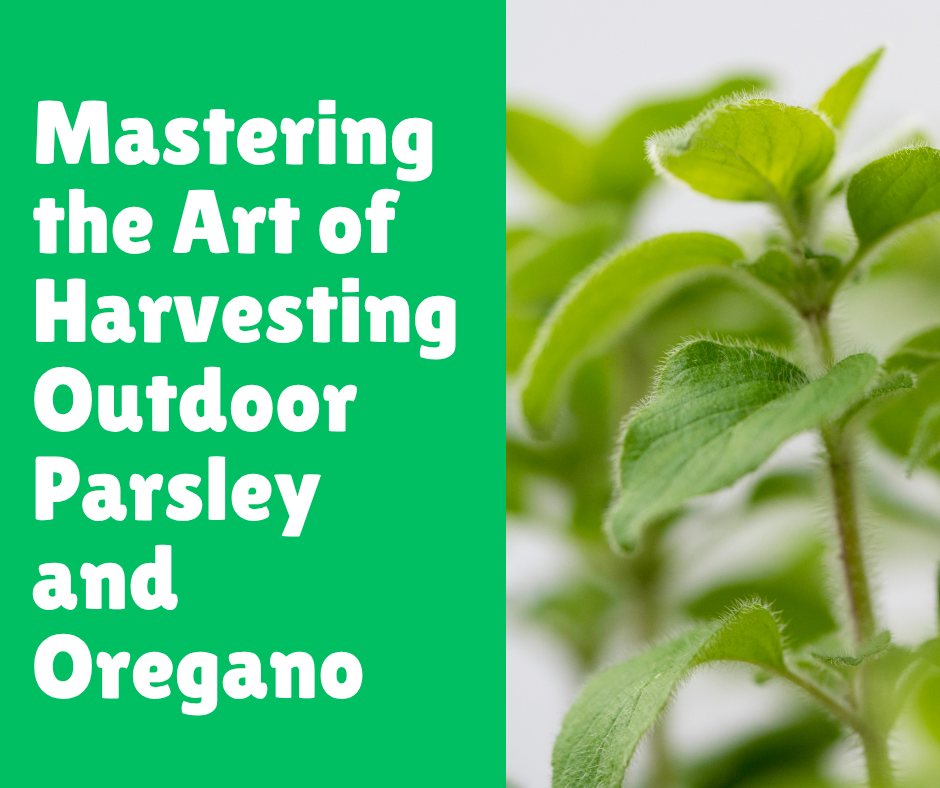
Mastering the Art of Harvesting Outdoor Parsley and Oregano
Post Disclaimer
Content on this site is for educational use only and not a substitute for medical advice. Herbal remedies are based on traditional knowledge and not medical recommendations. Please consult a healthcare professional before trying any herb. We do not assume responsibility for any outcomes or adverse effects resulting from the use of information provided here.
I remember my first herb garden. It was a chaotic little patch of dirt where I threw some seeds and hoped for the best. To my absolute shock, things actually grew. The parsley exploded into a vibrant green bush, and the oregano went wild, creeping over the edges of its designated space.
But then came the real challenge: when and how do I actually harvest this stuff? I snipped a bit here, a bit there, and sometimes ended up with a sad, bald-looking plant. It was a lot of trial and error, let’s be honest.
If you’re standing in your garden, staring at your flourishing herbs and feeling a little lost, you’ve come to the right place. Harvesting isn’t just about grabbing a handful of leaves; it’s a bit of a science and an art form. Done right, you’ll have a continuous supply of fresh herbs all season long.
Done wrong… well, let’s just say your plants might decide to pack it in early for the year. So, let’s talk about how to get it right, avoid the rookie mistakes I made, and keep your parsley and oregano plants happy, healthy, and incredibly productive.
Meet Parsley: The Biennial Wonder
Parsley is technically a biennial, which is a fancy way of saying it has a two-year life cycle. In its first year, it focuses all its energy on producing lush, delicious leaves.
This is prime time for harvesting! In its second year, the plant’s mission changes. It will send up a flower stalk (a process called bolting) to produce seeds, and the leaf flavor becomes bitter and less appealing.
So, for the best flavor, we treat parsley like an annual and focus all our harvesting efforts in its first year of growth.
There are two main types you’re likely growing:
- Curly Parsley: This is the one you often see as a retro garnish. It has tightly ruffled leaves and a milder flavor. I find it’s great for adding texture to dishes.
- Flat-Leaf (Italian) Parsley: This is my personal favorite. It has flat, celery-like leaves and a much more robust, sweet flavor. It’s the go-to for most cooking applications.
The harvesting technique is the same for both, so no need to overthink it. The key takeaway for parsley is that it grows from its center, sending up new stalks from the crown of the plant. This is crucial information for when we start snipping.
Say Hello to Oregano: The Prolific Perennial
Oregano is a completely different beast. It’s a hardy perennial, meaning it will come back year after year, often bigger and more aggressive than the last. Seriously, this plant has a will to live that I deeply respect. It’s a member of the mint family, which should give you a clue about its tendency to spread. If you don’t keep it in check, it might just try to take over your entire garden.
Oregano’s flavor is most potent just before it flowers. You’ll see little flower buds forming at the tips of the stems, and that’s your signal that peak flavor is imminent. This doesn’t mean you can’t harvest it at other times you absolutely can but for that classic, pungent oregano punch, timing is everything.
Unlike parsley, which grows from a central crown, oregano grows along spreading stems, sending out new leaves all over the place. This gives us a lot more flexibility in how we harvest it.
The Art of the Harvest: Step-by-Step Instructions
Alright, let’s get down to business. You have your scissors or snips, you know your plants, and you’re ready to bring some of that green goodness into your kitchen. Let’s break down the process for each herb.
How to Harvest Parsley for Continuous Growth
Remember how parsley grows from the center? This is the golden rule of harvesting it. We want to encourage the plant to keep producing new leaves from its core all season long. The best way to do that is by using the “cut-and-come-again” method.
Here’s how you do it:
- Identify the Outer Stalks: Look at your parsley plant. You’ll see a cluster of stems, with the newer, smaller ones in the middle and the larger, more mature ones on the outside. We are only interested in the outer stalks. Never cut from the center of the plant! I can’t stress this enough. Cutting the central growth point can stunt or even kill your plant.
- Follow the Stem Down: Choose a healthy-looking outer stalk. Don’t just snip off the leafy tops. Follow that stem all the way down to the base of the plant, where it emerges from the soil.
- Make a Clean Cut: Using sharp scissors or herb snips, cut the entire stem off at its base. A clean cut helps the plant heal quickly and reduces the risk of disease. Leaving a little stub can invite rot, so get as close to the crown as you can without damaging it.
- Work Your Way Around: Continue harvesting the outer stalks, working your way around the plant. A good rule of thumb is to never harvest more than one-third of the plant at a time. This leaves plenty of foliage for photosynthesis, which is how the plant makes energy to grow more delicious leaves for you.
By following this method, you’re essentially pruning the plant in a way that signals it to produce more. The plant will continue to push new growth from the center, giving you a steady supply of parsley right up until the first hard frost. It’s a win-win.
How to Harvest Oregano Like a Pro
Oregano is much more forgiving than parsley. Its sprawling nature means you can harvest it in a couple of different ways depending on your needs.
For a Small Amount (Your Pizza Can’t Wait):
If you just need a few sprigs for a sauce or a garnish, you can simply snip off the top few inches of any stem.
- Look for a healthy stem that’s at least 4-6 inches long.
- Make your cut just above a set of leaves. Why? Because at the base of those leaves are nodes that will sprout two new stems. So, for every one stem you cut, you’ll get two in its place. You’re basically telling the plant to get bushier, which is exactly what we want.
For a Large Harvest (Drying and Storing):
The best time for a big oregano harvest is, as I mentioned, right before the plant flowers. This is when the essential oils are at their peak.
- Wait for the Right Moment: Look for the plant to be lush and full, and for tiny flower buds to start appearing at the tips of the stems. This usually happens mid-summer.
- Cut Back Hard: Don’t be shy here. Oregano loves a good haircut. You can cut the plant back by about half, or even down to just a few inches from the ground.
- Bundle and Dry: Gather the cut stems into small bundles and hang them upside down in a warm, dry, well-ventilated area away from direct sunlight. Once the leaves are crumbly and dry, you can strip them from the stems and store them in an airtight container.
This kind of aggressive haircut encourages a second, often equally impressive, flush of growth before the end of the season. You’ll likely get another, smaller harvest in the early fall. IMO, this is the best way to stock your pantry with homegrown dried oregano for the winter.
Common Harvesting Mistakes to Avoid (Trust Me on This)
I’ve made just about every mistake in the book, so you don’t have to. Avoiding these common pitfalls will keep your herb garden thriving and your kitchen well-stocked.
Mistake 1: The “Mow-Down” Haircut on Parsley
This is when you treat your parsley plant like a lawn and just shear off the top. It feels efficient, I get it, but it’s a death sentence for your plant’s productivity. You’re cutting off all the new growth points and leaving behind leggy, unproductive stems. Always cut parsley stems individually at the base.
Mistake 2: Harvesting from the Inside Out
This is the cousin of the mow-down. Grabbing those tender, new leaves from the center of the parsley plant is so tempting, but it’s the absolute worst thing you can do. The center is the plant’s engine room. Damage it, and production grinds to a halt. Protect the crown at all costs!
Mistake 3: Letting Your Oregano Flower
Have you ever tasted oregano after it has gone to flower? It’s… fine. But it’s not great. The plant puts all its energy into making flowers and seeds, and the flavor of the leaves takes a nosedive. It becomes more woody and less aromatic. Harvest oregano before the flowers open for the best flavor. If you see flowers, it’s not the end of the world just snip them off to encourage more leaf growth.
Mistake 4: Taking Too Much at Once
Enthusiasm is great, but over-harvesting is a real problem. Taking more than a third of the plant at any given time stresses it out. The plant needs its leaves to absorb sunlight and create energy. If you strip it bare, it may not have enough resources to recover and produce new growth. Be patient and harvest lightly but frequently.
Mistake 5: Using Dull Tools
Using dull, grimy scissors or just tearing stems with your fingers is a big no-no. Ragged tears create larger wounds that are more susceptible to pests and diseases. A sharp, clean pair of snips makes a precise cut that the plant can heal from quickly and efficiently. It’s a small detail that makes a big difference.
What To Do With Your Bounty
Okay, so you’ve successfully harvested a beautiful bunch of parsley and oregano. Now what? The possibilities are endless, my friend.
Fresh parsley is amazing in salads, tabbouleh, marinades, or just chopped and sprinkled over… well, anything. It adds a bright, clean flavor that lifts up heavy dishes. I love making a big batch of chimichurri or a simple parsley pesto.
Fresh oregano is a powerhouse in Mediterranean cooking. It’s perfect for tomato sauces, roasted vegetables, grilled meats, and homemade salad dressings. A few fresh leaves on a pizza right out of the oven? Chef’s kiss.
If you have more than you can use, both herbs can be preserved.
- Parsley: You can freeze chopped parsley in ice cube trays with a little water or olive oil. Just pop a cube into your soup or sauce for a burst of summer flavor in the middle of winter. Drying parsley isn’t my favorite, as it loses a lot of its flavor, but freezing works beautifully.
- Oregano: Oregano is a star when dried. As I mentioned earlier, hanging it in bundles is the classic method. The flavor concentrates as it dries, giving you that pungent herb you know and love from the spice aisle only way better because you grew it yourself.
Conclusion: You’ve Got This!
Harvesting your outdoor parsley and oregano doesn’t have to be intimidating. Once you understand the basic growth habits of each plant, it all clicks into place. Remember the key takeaways:
- For Parsley: Harvest the outer stems from the base of the plant. Never cut from the center, and don’t take more than one-third of the plant at a time. Treat it like an annual for the best flavor.
- For Oregano: Snip stems just above a set of leaves to encourage bushier growth. For a large harvest, cut the plant back by half right before it flowers to get the most potent flavor.
- Always use clean, sharp tools to make precise cuts and keep your plants healthy.
- Avoid the common mistakes of giving your plants a bad haircut, harvesting from the wrong spot, or letting them go to flower.
Gardening is a journey of learning and discovery, and harvesting is one of the most rewarding parts. There’s nothing quite like walking outside, snipping a few herbs you grew yourself, and bringing them inside to transform a meal. You’re not just harvesting leaves; you’re harvesting flavor, satisfaction, and a connection to your food.
Now I want to hear from you! Do you have any other tips for harvesting parsley or oregano? What are your favorite ways to use these herbs in the kitchen? Drop a comment below and share your wisdom! Happy harvesting! 🙂