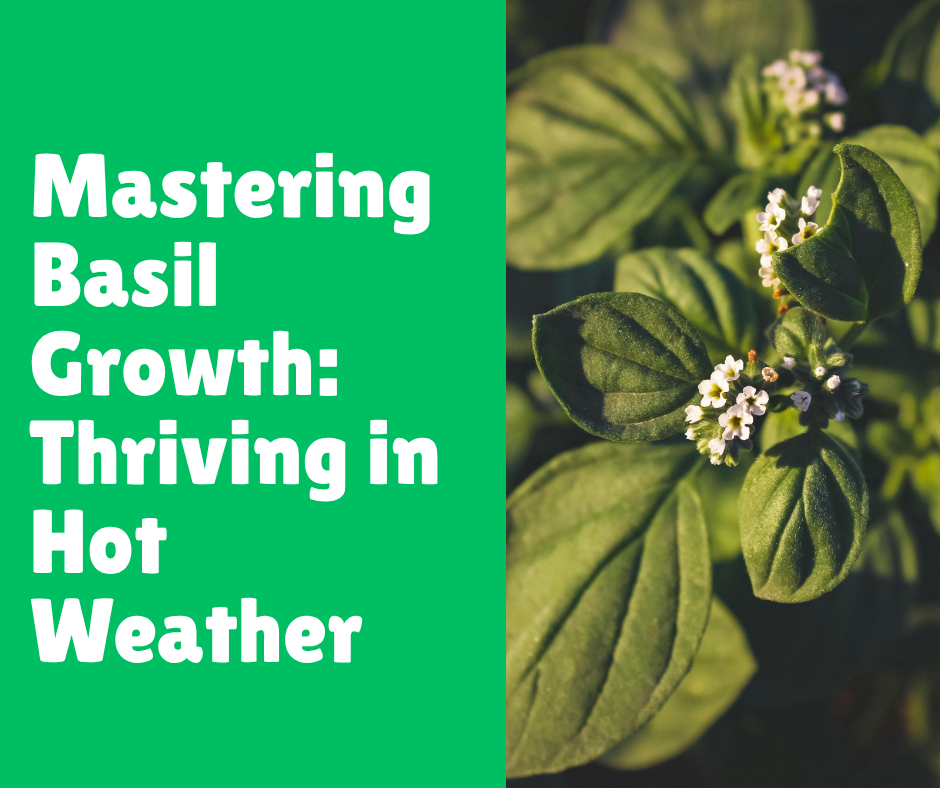
Mastering Basil Growth: Thriving in Hot Weather
Post Disclaimer
Content on this site is for educational use only and not a substitute for medical advice. Herbal remedies are based on traditional knowledge and not medical recommendations. Please consult a healthcare professional before trying any herb. We do not assume responsibility for any outcomes or adverse effects resulting from the use of information provided here.
There’s something incredibly satisfying about stepping out into your garden and snipping off a few fresh basil leaves. The scent alone is enough to transport you to a sunny Italian kitchen, ready to whip up a fresh pesto or top a Caprese salad. But if you live in a place where summer means relentless heat and scorching sun, you know the struggle is real.
Basil, which loves the sun, can quickly turn from a lush, vibrant herb into a sad, wilted, and bolting plant. I’ve been there, staring at my struggling basil patch, wondering what I was doing wrong.
For years, I battled the high temperatures, trying to keep my favorite herb happy. It felt like a constant fight against nature. But through a lot of trial, error, and a bit of stubbornness, I learned that it’s not just possible to grow basil in hot weather it’s possible to have it thrive. You just need to adjust your strategy. This isn’t about fighting the heat; it’s about learning to work with it.
In this guide, I’m going to walk you through everything I’ve learned. We’ll cover choosing the right varieties, perfecting your watering schedule, providing the right kind of shade, and feeding your plants for success. Forget the frustration of past attempts. Let’s get you on the path to a summer-long supply of beautiful, fragrant basil.
Choosing the Right Basil Varieties
Not all basil is created equal, especially when it comes to heat tolerance. While your standard Genovese basil is a classic for a reason, it can be one of the first to bolt (produce flowers and seeds) when temperatures soar. When you’re gardening in a hot climate, seeking out specific heat-tolerant varieties can make a world of difference.
Here are a few of my top recommendations:
‘Prospera’ Basil: This is a fantastic choice. It’s not just more tolerant of high temperatures, but it’s also highly resistant to downy mildew, a common disease that can plague basil in humid conditions. The flavor is classic and robust, perfect for all your culinary needs. I switched to this variety a few years ago for my main pesto crop and saw a dramatic improvement in late-summer production.
‘Everleaf Emerald Towers’ Basil: This one is a game-changer for container gardeners or those with limited space. It grows in a columnar habit, meaning it grows tall and tidy rather than bushy and sprawling. It’s incredibly slow to bolt, giving you a much longer harvest window even in the peak of summer. I love planting these in pots on my patio for easy access.
Spicy Globe Basil (or Greek Basil): These compact, small-leafed varieties naturally form a beautiful, round shape. Their smaller leaves seem less prone to wilting in intense heat, and their spicy, peppery flavor adds a wonderful kick to dishes. They are incredibly resilient and almost seem to enjoy the heat.
Holy Basil (Tulsi): If you’re open to different flavor profiles, Holy Basil is an excellent choice for hot climates. Native to Southeast Asia, it is well-adapted to heat and humidity. It has a more clove-like, peppery flavor and is often used in teas and Thai cooking. It’s a powerhouse in the garden and will keep producing when other basils have given up.
While you can still grow your favorite Genovese, consider planting a mix. Have your classic variety for that perfect pesto flavor, but also plant a few of these heat-tolerant champions to ensure you have a steady supply all season long.
Location, Location, Location: Site Selection is Key
Where you plant your basil is just as important as what you plant. Basil is often labeled as a “full sun” herb, and that’s true in milder climates. But in regions where “full sun” means a relentless, scorching blast from 10 a.m. to 6 p.m., that advice needs a little modification.
The Magic of Morning Sun:
The ideal location for basil in a hot climate is a spot that receives about six hours of direct morning sun, followed by light, dappled shade during the hottest part of the afternoon (roughly from 1 p.m. to 5 p.m.).
Morning sun is less intense and gives the plant the energy it needs to photosynthesize and grow without the stress of the brutal afternoon heat.
I found the perfect spot in my garden is on the east side of my house, where it gets direct sun until about 1 p.m. and then is shaded by the house for the rest of the day. If you don’t have a naturally shady spot, don’t worry we’ll talk about creating artificial shade in the next section.
Soil Preparation for Success:
Basil needs well-draining soil that is rich in organic matter. Hot weather puts extra stress on plants, and a strong root system is their best defense. Rich soil encourages deep, healthy roots.
Before planting, amend your garden bed or container with plenty of compost. Compost does three wonderful things:
Improves Drainage: It prevents the soil from becoming waterlogged, which can lead to root rot, especially in humid climates.
Retains Moisture: It acts like a sponge, holding onto water and releasing it to the plant’s roots as needed. This is crucial for preventing the soil from drying out too quickly between waterings.
Provides Nutrients: It offers a slow and steady supply of essential nutrients, feeding your basil throughout the season.
I aim for a mix of about 70% high-quality garden soil and 30% compost. If you’re using containers, make sure to use a high-quality potting mix designed for containers and add a few extra handfuls of compost. And please, ensure your pots have drainage holes! No plant wants to sit in a puddle.
The Art of Watering and Mulching
Once your basil is in the ground, your focus shifts to maintenance. In hot weather, watering and mulching are the two most critical tasks for keeping your plants alive and well. It’s a delicate balance; too little water and they wilt, too much and you risk root rot.
Mastering the Watering Can
The number one rule of watering basil in the heat is to water deeply and less frequently, rather than shallowly and every day. A light sprinkle on the soil surface might seem helpful, but it only encourages shallow roots that are more vulnerable to drying out. Deep watering encourages the roots to grow further down into the soil where it’s cooler and moisture is more consistent.
How to Water:
Check the Soil: Don’t water on a schedule. Water when the plant needs it. The best way to know is to stick your finger about two inches into the soil near the base of the plant. If it feels dry at that depth, it’s time to water.
Water at the Base: Avoid watering the leaves. Wetting the foliage, especially in hot and humid weather, can create a breeding ground for fungal diseases like downy mildew. Use a watering can with a long spout or a soaker hose to deliver water directly to the soil at the base of the plant.
Water in the Morning: The best time to water is early in the morning. This gives the plant a supply of moisture to draw from throughout the day as the temperature rises. It also allows any moisture that does splash onto the leaves to dry quickly, reducing disease risk. Watering in the evening is the second-best option, but morning is preferred.
For Containers: Plants in containers dry out much faster than those in the ground. During a heatwave, you may need to water your potted basil every day. The finger test is even more crucial here. Pots made of terracotta are porous and dry out especially quickly, so you may want to consider plastic or glazed ceramic pots in very hot climates.
The Magic of Mulch
If there is one single thing you can do to make your life easier and your basil happier in hot weather, it’s mulching. I was skeptical at first, but now I am a total convert. I never leave my garden soil bare.
Mulch is simply a layer of material applied to the surface of the soil. For a vegetable and herb garden, an organic mulch is best. A two-to-three-inch layer of mulch provides a wealth of benefits:
Moisture Retention: It dramatically slows down the evaporation of water from the soil surface, meaning you’ll need to water less often.
Temperature Regulation: It acts as an insulator, keeping the soil and the plant’s roots cooler during the day. This reduces stress on the plant.
Weed Suppression: A thick layer of mulch will block sunlight from reaching weed seeds, preventing them from germinating. Less weeding is always a win in my book!
Soil Improvement: As organic mulch breaks down over time, it adds nutrients and organic matter to the soil, improving its structure.
What to Use for Mulch:
Shredded Straw or Hay: This is my personal favorite. It’s lightweight, inexpensive, and breaks down nicely over the season.
Shredded Leaves: If you have deciduous trees, you have a free source of excellent mulch. Just run them over with a lawnmower a few times to shred them up before applying.
Grass Clippings: Use these in thin layers and let them dry between applications to prevent them from matting down and becoming slimy. Make sure the grass hasn’t been treated with herbicides.
Apply the mulch around your basil plants, but be sure to leave a small, one-inch gap right around the stem to prevent moisture from building up against it, which could cause it to rot.
Strategic Pruning and Feeding
With your watering and mulching game on point, the next step is to encourage your basil to become a lush, bushy plant rather than a tall, spindly one. This is achieved through strategic pruning and providing the right nutrients.
Prune for Bushiness, Not Just for Harvest
Pruning is not just about harvesting leaves for your dinner. Regular, proper pruning is the secret to a full, bushy basil plant that produces an abundance of leaves. It also plays a vital role in preventing the plant from bolting.
When basil bolts, it focuses all its energy on producing flowers and seeds, and its leaf production grinds to a halt. The flavor of the leaves also becomes more bitter. Heat and stress are the primary triggers for bolting, so in hot climates, staying on top of pruning is non-negotiable.
The Right Way to Prune:
Start Early: Begin pruning your basil when it’s about six to eight inches tall and has several sets of leaves.
Find the Growth Point: Look down the main stem to a point just above a set of two large leaves. You will see two tiny new leaves emerging from the point where the larger leaves meet the stem. This is the growth point.
Make the Cut: Using sharp scissors or your fingernails, snip the main stem about a quarter-inch above this set of leaves.
Watch it Branch: In a week or two, you’ll see that where you made one cut, two new stems have begun to grow. You have just doubled the potential leaf production for that branch!
Repeat, Repeat, Repeat: Continue this process on all the main stems and then on the new stems as they grow. Always be on the lookout for flower buds forming at the top of the stems and pinch them off immediately.
This regular pinching sends a signal to the plant to put its energy into creating more leaves and branches, delaying the bolting process and giving you a much longer and more productive harvest.
Feeding for Health and Vigor
While amending your soil with compost provides a good baseline of nutrients, basil is a heavy feeder, especially when you are constantly harvesting from it. The stress of hot weather also means the plant can use an extra nutritional boost.
However, be careful not to over-fertilize, especially with high-nitrogen fertilizers. Too much nitrogen can produce rapid, weak growth that is more susceptible to pests and diseases. It can also dilute the essential oils in the leaves, resulting in less flavorful basil.
A Gentle Feeding Schedule:
I find the best approach is to provide a gentle, balanced liquid feed every three to four weeks during the growing season.
Liquid Seaweed or Fish Emulsion: These are excellent organic options. They provide a balanced mix of macro and micronutrients that support overall plant health without overloading the plant with nitrogen.
Compost Tea: If you make your own compost, brewing some compost tea is a fantastic, free way to feed your plants.
Follow the Instructions: Whatever fertilizer you choose, be sure to dilute it according to the package instructions—or even a little weaker. With fertilizer, less is often more.
Think of it as giving your plants a vitamin supplement to help them cope with the stress of the heat and to replenish the nutrients they lose from your constant harvesting.
Common Mistakes to Avoid
Even with the best intentions, it’s easy to make a few missteps when the heat is on. Here are some of the most common mistakes I’ve made myself or seen other gardeners make, and how you can steer clear of them.
Mistake: Planting in “Full Sun” Without Protection. As we discussed, the “full sun” label on a plant tag doesn’t account for the brutal afternoon sun in places like Texas or Arizona. Planting basil without any afternoon shade is a recipe for scorched leaves, constant wilting, and early bolting.
Fix: Be realistic about your sun. Use shade cloth (a 30-40% weave is perfect), plant on the east side of a structure, or use taller plants like tomatoes or sunflowers to cast some afternoon shade.
Mistake: Inconsistent Watering. Watering a little bit every day leads to shallow roots. Then, when you miss a day during a heatwave, the plant has no deep water reserves to draw from and collapses.
Fix: Commit to the deep watering method. Water thoroughly when the soil is dry two inches down. This builds resilience. And always, always mulch to keep that moisture locked in.
Mistake: Letting it Flower. I know, the little flower spikes are kind of pretty. But for basil, they are the beginning of the end. Many gardeners wait too long to pinch off flower buds, and by the time they do, the plant has already begun to shift its energy away from leaf production.
Fix: Be ruthless. Make pruning and pinching off flower buds a daily or every-other-day task. The moment you see a flower spike forming, pinch it off. Your reward will be more leaves for a longer period.
Mistake: Harvesting from the Bottom. It feels natural to pick the biggest, oldest leaves from the bottom of the plant. However, this does nothing to encourage new growth. It slowly strips the plant and leaves you with a tall, bare stem with a few leaves at the top.
Fix: Always prune from the top, as described in the pruning section. Harvesting should be a form of pruning. When you need basil for a recipe, snip off the top few inches of a stem right above a leaf node. This is a win-win: you get your herbs, and the plant gets the signal to become bushier.
Conclusion
Growing a thriving patch of basil in hot weather doesn’t have to be a source of frustration. It’s about shifting your mindset from simply planting an herb to actively creating the right environment for it to flourish. By being intentional with your choices, you can enjoy that fresh, homegrown basil flavor all summer long.
Start Strong: Choose heat-tolerant varieties and plant them in a spot that gets morning sun and afternoon shade. Prepare your soil with plenty of rich compost.
Water Smart: Water deeply and infrequently, directly at the soil level. And don’t forget the transformative power of a good two-to-three-inch layer of organic mulch.
Prune with Purpose: Prune early and often to encourage a bushy habit and, most importantly, pinch off any flower buds the moment you see them to prevent bolting.
Feed Gently: Provide a balanced, liquid organic fertilizer every few weeks to replenish nutrients and support the plant through the stress of heat and constant harvesting.
Gardening is a journey of learning and adapting. Don’t be discouraged if a plant or two struggles. Take it as a learning opportunity, make an adjustment, and try again. The reward of walking into your garden and being greeted by the incredible aroma of healthy, happy basil is worth every bit of the effort.
Now I’d love to hear from you! What are your biggest challenges with growing basil in the heat? Do you have a favorite heat-tolerant variety or a tip that has worked wonders in your garden? Share your thoughts and experiences in the comments below let’s learn from each other!
Frequently Asked Questions (FAQs)
My basil is wilting every afternoon, even though I’m watering it. What’s wrong?
This is often just a sign of heat stress, not necessarily a lack of water. If the soil is moist and the plant perks back up in the evening or morning, it’s likely just trying to conserve moisture during the hottest part of the day by drooping its leaves. However, this is a clear signal that the afternoon sun is too intense.
Can I grow basil indoors to avoid the heat?
You can, but it’s challenging to replicate the conditions basil loves. Basil needs at least six hours of very bright, direct light to thrive, which is more than most sunny windowsills provide. You would likely need a strong grow light to have real success.
My basil leaves are turning yellow. What does that mean?
Yellowing leaves can signal a few different things. If the lower leaves are turning yellow and the soil is constantly wet, you are likely overwatering. If the yellowing is more uniform across the plant and growth is stunted, it could be a nitrogen deficiency, meaning it’s time to feed your plant.
How can I save basil that has already started to flower?
You can definitely try! First, give it a hard prune. Cut back all the flowering stems, taking off about one-third of the plant’s total height. Make your cuts just above a set of leaves. After pruning, give it a good watering and a dose of liquid fertilizer to encourage it to put out new leafy growth.
What are some good companion plants for basil in a hot climate?
Tomatoes are a classic companion for basil, and they can provide some welcome afternoon shade as they grow taller. Peppers and marigolds are also great choices. Marigolds are known to deter some pests. I like to plant my basil near the base of my taller tomato plants on their east side, which creates a perfect microclimate for them.