
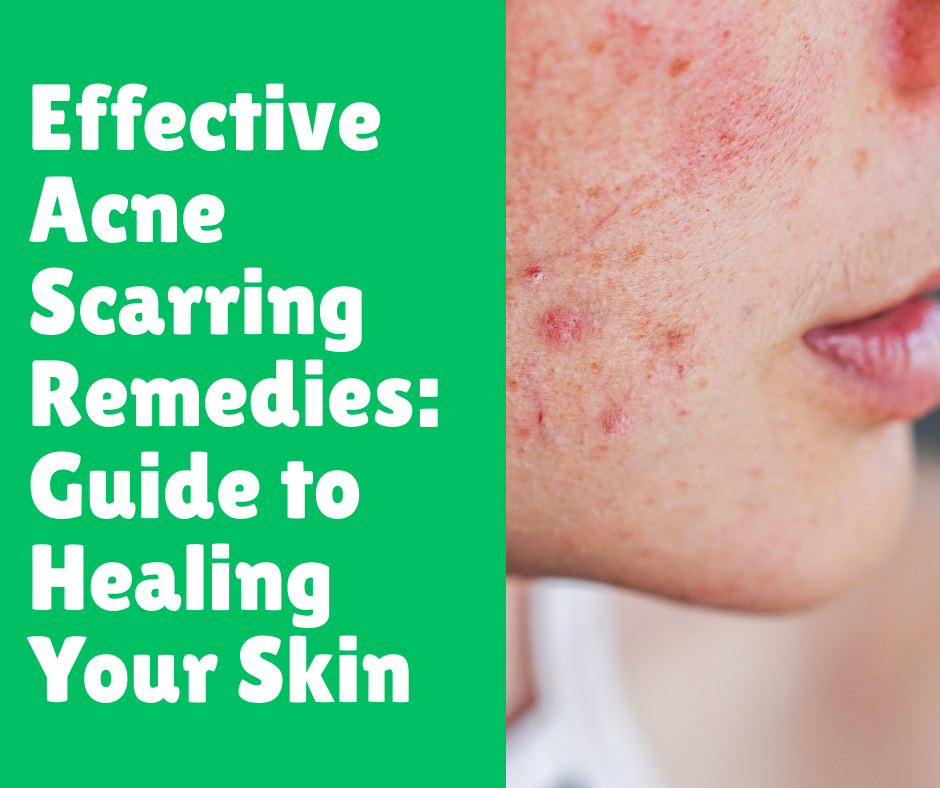
Effective Acne Scarring Remedies: Guide to Healing Your Skin
Post Disclaimer
Content on this site is for educational use only and not a substitute for medical advice. Herbal remedies are based on traditional knowledge and not medical recommendations. Please consult a healthcare professional before trying any herb. We do not assume responsibility for any outcomes or adverse effects resulting from the use of information provided here.
If you’ve ever struggled with acne, you know the frustration of dealing with breakouts, and once the pimples fade, the scars often linger long after your skin has cleared up.
Whether you’re dealing with pitted scars, hyperpigmentation, or dark spots, acne scarring can feel like a reminder of past skin battles.
The good news? You don’t have to live with them forever. There are plenty of remedies, treatments, and strategies that can help fade acne scars and get you back to smooth, glowing skin.
But here’s the thing: It’s not always as simple as applying a cream and waiting for magic to happen.
Healing acne scars is a journey, and it requires understanding the types of scars you have, knowing which remedies work, and being patient as your skin heals.
Trust me, I’ve been there, and I can tell you firsthand that with the right approach, it’s possible to see real improvements over time.
In this article, we’ll dive deep into effective acne scarring remedies, from topical treatments to lifestyle changes, and provide you with step-by-step instructions on how to treat your scars in the most effective way possible.
How Acne Scarring Happens: Understanding the Process
Before we jump into remedies, it’s important to understand why acne scars form in the first place. Acne occurs when hair follicles become clogged with oil, dead skin cells, and sometimes bacteria. The skin reacts with inflammation, which can damage the skin’s surface, leading to the formation of scars.
There are different types of scars:
- Atrophic Scars: These are pitted or indented scars that happen when the skin fails to produce enough collagen to heal the damage.
- Hypertrophic Scars: Raised scars formed when too much collagen is produced.
- Post-Inflammatory Hyperpigmentation (PIH): Dark spots or marks that appear after a pimple heals, usually due to inflammation.
So now that we understand how acne scars form, let’s explore the treatments and remedies that can help speed up the healing process.
Acne Scarring Remedies: What Works?
Here’s the good news: Many treatments exist to help fade acne scars. But with so many options out there, it’s easy to get lost in a sea of conflicting advice.
Let’s break down the most effective and scientifically backed remedies, so you can make informed decisions about your skincare routine.
Topical Treatments: The Basics of Scar Healing
One of the easiest and most accessible ways to treat acne scars is by using topical treatments.
These products are available in a variety of forms, from serums to creams, and they work by stimulating collagen production, exfoliating the skin, or lightening pigmentation. Below are some of the most effective ingredients and products you can try.
a. Retinoids (Vitamin A Derivatives)
Retinoids are one of the most powerful ingredients when it comes to acne scar treatment. They work by speeding up cell turnover, which helps to fade hyperpigmentation and promote the production of new, healthy skin cells.
How to Use: Start with a lower strength (0.25% or 0.5%), applying a small amount at night, and increase gradually as your skin gets used to it. Be sure to apply sunscreen during the day, as retinoids can make your skin more sensitive to sunlight.
b. Vitamin C
Vitamin C is known for its brightening properties and its ability to even out skin tone. It helps to reduce dark spots and hyperpigmentation by inhibiting melanin production. It’s also an antioxidant, meaning it helps protect your skin from further damage.
How to Use: Look for a stabilized form of Vitamin C (like ascorbic acid) in serums or creams. Apply a thin layer to clean, dry skin in the morning.
c. Alpha Hydroxy Acids (AHAs)
AHAs, like glycolic acid, are exfoliants that work by removing dead skin cells and promoting cell turnover. Regular use can help fade dark spots and improve the texture of your skin, making scars less noticeable.
How to Use: Use an AHA-based serum or toner a few times a week. If you’re new to AHAs, start with a lower concentration and gradually build up.
Chemical Peels: Intensive Treatment for Scar Healing
Chemical peels are a more advanced treatment option that involves applying a solution to the skin that causes the top layer of skin to peel off, revealing smoother and healthier skin underneath. They are particularly effective for those with deeper scars or those struggling with post-inflammatory hyperpigmentation.
How Chemical Peels Help:
Peels work by exfoliating the skin, which helps to improve the texture and tone, reduce hyperpigmentation, and promote collagen production. They can be tailored to your skin type and scar severity, from light peels for surface-level pigmentation to deeper peels for more substantial scarring.
What You Can Expect:
You may experience redness, peeling, and some irritation for a few days post-treatment. It’s essential to stay out of the sun after a chemical peel, as your skin will be more sensitive.
When to Seek Professional Help:
While at-home chemical peels are available, it’s always a good idea to consult a dermatologist for professional treatments, especially if you have deep scars. They will be able to customize the treatment to your specific skin needs.
Microneedling: Stimulating Collagen Production
Microneedling, also known as dermarolling or collagen induction therapy, is a popular treatment for acne scars.
It involves tiny needles creating micro-injuries in the skin, which stimulates collagen and elastin production. Over time, this can help to smooth out the skin’s surface and improve the appearance of scars.
How to Use:
Microneedling can be done at home using a dermaroller or by a professional using a dermapen. At-home devices typically have shorter needles, while professional treatments use longer needles for deeper penetration.
What to Expect:
There might be some redness and swelling after the procedure, similar to a mild sunburn. The healing process takes about 24-48 hours, and results will start showing after multiple sessions.
Caution:
Microneedling should be done carefully, especially at home, to avoid injury or infection. Always sanitize your dermaroller and follow instructions closely.
Natural Remedies: Can They Really Help?
While scientific treatments are often the most effective, there are also a number of natural remedies that can provide mild benefits for acne scarring.
Though these remedies are usually not as potent as medical treatments, they may still be worth trying for minor scarring.
a. Aloe Vera
Aloe vera is known for its soothing properties, which can help to reduce redness and inflammation. It can also aid in skin regeneration, making it a popular remedy for healing scars.
How to Use:
Apply fresh aloe vera gel directly to the scarred area and leave it on for about 30 minutes before washing it off. Do this twice a day for a few weeks.
b. Honey
Honey has natural antibacterial properties and is a humectant, meaning it helps to retain moisture in the skin. It can help to lighten scars and promote healing.
How to Use:
Apply raw honey to the scarred areas, leave it on for 15-20 minutes, and then rinse off with lukewarm water.
Mistakes to Avoid When Treating Acne Scars
When treating acne scars, it’s easy to make mistakes that can hinder your progress. Here are a few things to watch out for:
| Mistake | Why It’s Harmful | How to Avoid It |
| Skipping Sunscreen | Sun exposure can worsen scarring and pigmentation. | Always apply sunscreen daily, especially after treatments. |
| Overuse of Exfoliants | Over-exfoliating can irritate the skin and worsen scars. | Stick to exfoliating 2-3 times a week, depending on your skin. |
| Expecting Instant Results | Scar healing takes time, and results may not be immediate. | Be patient; visible improvement often takes 6-12 weeks. |
| Using Harsh Ingredients | Some products may irritate or cause breakouts. | Use gentle, non-comedogenic products suited to your skin type. |
| Ignoring Skin Type | Using the wrong treatment for your skin type can make things worse. | Tailor treatments to your specific skin needs and concerns. |
Conclusion: Patience and Persistence Are Key
Treating acne scars isn’t a quick fix it’s a journey. Whether you’re using topical treatments, opting for professional procedures like microneedling or chemical peels, or even trying natural remedies, the key is consistency. You may not see results overnight, but with time and effort, you’ll notice gradual improvements.
Remember, healing acne scars is not just about the treatment it’s about understanding your skin and finding what works best for you. And if you don’t see immediate results, don’t be discouraged.
Your skin is resilient, and with the right approach, you can significantly reduce the appearance of scars over time.
FAQs
Q1: Can acne scars be completely removed?
It’s unlikely that acne scars can be completely removed, but with the right treatments, you can significantly reduce their appearance.
Q2: How long will it take to see results from acne scar treatments?
Results vary depending on the severity of your scars and the treatment method, but typically, you should start to see improvements in 6-12 weeks.
Q3: Are natural remedies effective for acne scars?
Natural remedies can help to lighten scars and soothe the skin, but they are generally less effective than medical treatments like retinoids or microneedling.
Q4: Can I combine different acne scar treatments?
Yes, but be cautious about overloading your skin. Combining treatments like Vitamin C with sunscreen is usually safe, but be careful when mixing exfoliating treatments with retinoids.