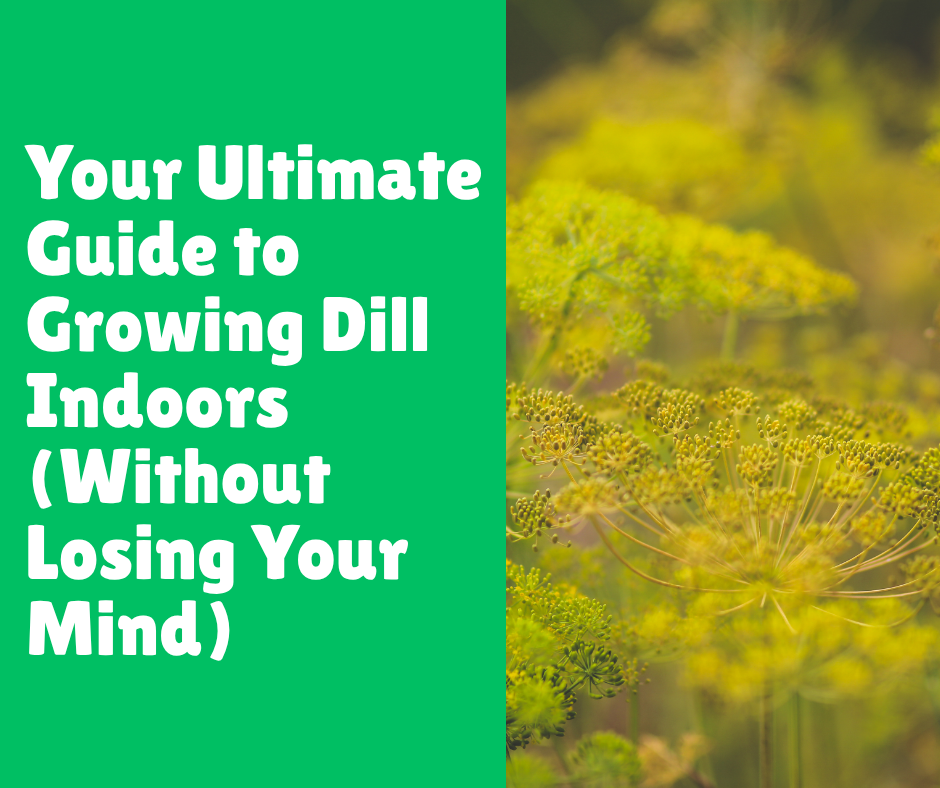
Your Ultimate Guide to Growing Dill Indoors (Without Losing Your Mind)
Post Disclaimer
Content on this site is for educational use only and not a substitute for medical advice. Herbal remedies are based on traditional knowledge and not medical recommendations. Please consult a healthcare professional before trying any herb. We do not assume responsibility for any outcomes or adverse effects resulting from the use of information provided here.
I have a confession to make: I used to be a serial plant killer. Ferns, succulents, you name it, they all met a tragic, crispy end in my care. So, when I first considered growing herbs indoors, I was skeptical.
Dill, with its feathery, delicate fronds, seemed particularly intimidating. I imagined it dramatically wilting the second I looked away.
But the thought of having fresh, aromatic dill on hand for pickles, salmon, and potato salads was just too tempting to ignore.
So, I dove in. And guess what? It’s not nearly as hard as it seems. In fact, growing dill inside is surprisingly rewarding. You get to control the environment, avoid pests (mostly), and snip fresh herbs whenever the mood strikes. It’s a little slice of garden therapy, right on your windowsill.
If a reformed plant executioner like me can do it, trust me, you absolutely can too. This guide is everything I learned the triumphs, the “oops” moments, and the secrets to growing a lush, happy dill plant indoors, all naturally.
Getting Started: The Foundation of Your Indoor Dill Empire
Before you can sprinkle fresh dill on everything, you need to set the stage. Getting the basics right from the start is the difference between a thriving plant and a sad, spindly stick.
Think of this as the “mise en place” for your gardening adventure. It’s way less stressful than realizing you don’t have a pot after you’ve already opened the seed packet.
Choosing Your Champion: Pot and Soil Selection
Let’s talk about your dill’s future home. This isn’t just any old pot; it’s a long-term commitment. Dill has a secret it doesn’t like to talk about: a long taproot. What does that mean for you? It means you need a deep pot.
- Depth is Key: Forget those cute, shallow little pots. You need a container that is at least 10-12 inches deep and about 6-8 inches wide. A deeper pot gives that taproot room to stretch its legs. A cramped root system leads to a stressed, unhappy plant that won’t produce much foliage. I learned this the hard way with a pot that looked deep but wasn’t. The dill grew about four inches tall and then just gave up on life.
- Drainage, Drainage, Drainage: This is non-negotiable. If your pot doesn’t have drainage holes at the bottom, it’s a hard pass. Dill, like most herbs, absolutely despises “wet feet,” which is the fancy term for roots sitting in a puddle of stagnant water. This is the fastest way to invite root rot, the silent killer of container plants. If you’ve fallen in love with a decorative pot that has no holes, you can try drilling some yourself or use it as a cachepot (a pretty pot to hide a less-pretty-but-functional pot inside).
- Material Matters (Sort of): Terracotta, plastic, or glazed ceramic will all work. Terracotta is porous and helps the soil breathe, which is great, but it also dries out faster. Plastic is lightweight and retains moisture well. I personally like using a simple plastic pot placed inside a more decorative ceramic one. Best of both worlds.
Now, for the stuff you fill the pot with. Please, for the love of all things green, do not just scoop up dirt from your backyard.
Garden soil is too dense, can contain pests and diseases, and will compact in a pot, slowly strangling your plant’s roots.
You need a high-quality, well-draining potting mix. Look for mixes designed for containers or herbs. These are typically a blend of peat moss or coco coir, perlite, and vermiculite.
This combination holds onto enough moisture to keep the plant happy but allows excess water to drain away freely. IMO, spending a few extra bucks on good soil is the best investment you can make for your indoor garden.
Seeds vs. Starts: The Great Debate
Should you grow from seed or buy a small plant (a “start”) from a nursery? There are pros and cons to each.
Growing from Seed:
- Pros: It’s incredibly cheap. You get a whole packet of seeds for the price of one small plant. You also have more control over the variety (Bouquet and Fernleaf are great compact choices for indoors). Plus, there’s a certain magic to seeing that first little green sprout poke through the soil. You feel like a wizard.
- Cons: It takes more time and patience. It can take 10-14 days just for the seeds to germinate. Dill is also known for being a bit of a diva about being transplanted, so starting from seed directly in its final pot is the best approach.
Buying a Starter Plant:
- Pros: Instant gratification! You have a dill plant right away. It’s a great option if you’re impatient or new to gardening and want a head start.
- Cons: It’s more expensive. You also run the risk of bringing home pests from the nursery. Most importantly, that cute little plant in its tiny pot is likely already root-bound and stressed. You’ll need to repot it immediately, and as we know, dill hates having its roots disturbed. The shock can sometimes be too much for it.
My Verdict? Start from seed. It’s a little more work upfront, but you’ll end up with a stronger, healthier plant that is perfectly adapted to its container from day one. It’s worth the wait.
The Growing Game: Nurturing Your Dill from Sprout to Harvest
Alright, your stage is set. You have a deep pot, a fluffy soil mix, and you’ve decided to be brave and start from seed. Now the real fun begins. This is where you put on your “plant parent” hat and provide the day-to-day care your dill needs to thrive.
Planting Your Dill Seeds
This part is simple, but precision helps.
- Moisten the Soil: Before you even think about the seeds, fill your pot with your chosen potting mix and water it thoroughly. You want the soil to be evenly moist, like a well-wrung-out sponge, not a swamp. Let it drain completely.
- Sow the Seeds: Sprinkle a few seeds maybe 5 to 10 on the surface of the soil. You’re planting a few extras just in case some don’t germinate. Don’t worry, we’ll thin them out later.
- Cover Lightly: Gently cover the seeds with a very thin layer of soil, about 1/4 inch deep. Dill seeds need some light to germinate, so don’t bury them too deep. I just sprinkle a little dry potting mix over the top and gently press it down.
- Wait Patiently: Place the pot in a warm spot. You can cover it with plastic wrap to create a mini-greenhouse effect, which helps maintain humidity. Now, you wait. Check the soil daily and mist it with a spray bottle if the surface looks dry. In about 10 to 21 days, you should see tiny green shoots. It’s happening!
Let There Be Light (And Lots of It)
This is the most critical part of growing dill indoors. Dill is a sun worshipper. It needs a minimum of 6 hours of direct sunlight per day to be truly happy. Without enough light, it will become “leggy”a sad, stretched-out plant with sparse foliage that will eventually flop over.
- The Best Spot: A south-facing window is the absolute best-case scenario. It provides the most intense and longest-lasting light. An east or west-facing window can also work, but you’ll need to monitor the plant closely.
- Rotate, Rotate, Rotate: Give your pot a quarter turn every day or two. This ensures all sides of the plant get light, encouraging it to grow straight and full instead of leaning desperately toward the window like a plant zombie.
- When a Window Isn’t Enough: Let’s be real, not everyone has a perfect, sun-drenched south-facing window. If your dill starts looking stretched or weak, you need to supplement with a grow light. You don’t need a crazy expensive setup. A simple full-spectrum LED grow light bulb screwed into a desk lamp or a clip-on lamp will do wonders. Position the light 6-12 inches above the plant and leave it on for 12-16 hours a day. FYI, this was a game-changer for my indoor herb garden.
Watering: The Delicate Dance
Overwatering is the number one crime committed against indoor herbs. People think more water equals more love, but it’s actually the opposite. Dill prefers its soil to be on the drier side.
The best method is the finger test. Stick your finger about an inch or two into the soil. If it feels dry at that depth, it’s time to water. If it feels moist, wait another day or two and check again. When you do water, do it thoroughly until you see water coming out of the drainage holes.
This ensures the entire root system gets a drink. Then, empty the saucer so the pot isn’t sitting in water. This simple routine prevents both underwatering and the dreaded root rot.
Thinning and Feeding Your Dill
Remember how we planted a bunch of seeds? Well, now it’s time for the plant version of The Hunger Games. Once your seedlings are about 2-3 inches tall, you need to choose the strongest one or two and remove the others. I know, it feels cruel.
But if you leave them all, they will compete for light, water, and nutrients, and you’ll end up with a bunch of weak, spindly plants instead of one robust one.
To thin them, simply use a small pair of scissors and snip the weaker seedlings at the soil line. Don’t pull them out! Pulling can disturb the delicate roots of the seedling you want to keep.
As for feeding, dill isn’t a particularly heavy feeder. Your potting mix likely has enough nutrients to get it started. About 6-8 weeks after sprouting, you can start feeding it with a balanced, all-purpose liquid fertilizer diluted to half-strength.
Feed it once a month during its active growing season (spring and summer). Don’t overdo it too much fertilizer can actually reduce the flavor and aroma of the leaves.
Harvest Time! Enjoying Your Homegrown Dill
This is the moment you’ve been waiting for. You’ve nurtured your little green baby from a tiny seed, and now it’s time to reap the rewards. Harvesting dill is easy, and doing it correctly actually encourages the plant to become bushier and produce more.
You can start harvesting as soon as the plant is about 6-8 inches tall and has several fronds.
- The Right Way to Snip: Always use clean scissors or your fingers to snip the fronds. Start by harvesting the older, outer leaves first. Cut them close to the main stem. This allows the new growth in the center to continue developing.
- Don’t Be Greedy: Never take more than one-third of the plant at one time. A good rule of thumb is to harvest what you need, when you need it. This light, frequent harvesting is the best way to keep your plant productive.
- Storing Your Harvest: Fresh dill is best used right away. The flavor is incredible. If you have extra, you can place the stems in a jar of water in the fridge (like a bouquet of flowers), where it will last for several days. For long-term storage, you can freeze the fronds in ice cube trays with a little water or oil, or you can dry them, though they lose a lot of their flavor when dried.
Common Mistakes (And How to Not Make Them)
I’ve made just about every mistake in the book, so you don’t have to. Here are the most common pitfalls when growing dill indoors.
1. The Wrong Pot (The “It’s Cute Though!” Mistake)
This is the big one. As we’ve covered, using a shallow pot is a death sentence for dill’s taproot. It’s tempting to grab that adorable little 4-inch pot from the store, but you must resist. Go deep or go home. A tall, narrow pot is far better than a short, wide one. Seriously, the 10-12 inch depth rule is not a suggestion.
2. Light Deprivation (The “Vampire Dill” Syndrome)
This is the mistake I see most often. People underestimate just how much light dill needs. If your dill is pale, floppy, and looks like it’s trying to crawl across the room to get to the window, it’s begging you for more light. A few hours of morning sun isn’t going to cut it. If you can’t provide at least 6 hours of direct sun, a grow light is not optional; it’s a necessity.
3. Overwatering (The “Killing with Kindness” Error)
You love your plant. You want it to be happy. So you water it every day. Soon, the leaves turn yellow, the stem gets mushy at the base, and the whole thing keels over. You’ve drowned it. Remember the finger test. Let the soil dry out between waterings. It’s better to underwater slightly than to overwater. A thirsty plant will wilt a little, but it will perk right back up after a drink. A plant with root rot is, well, a goner.
4. Fear of Harvesting (The “It’s Too Pretty to Cut!” Problem)
I get it. Your plant looks so perfect and lush, and you don’t want to ruin it. But here’s the thing: harvesting encourages growth. When you snip off fronds, you’re sending a signal to the plant to produce more. If you don’t harvest it, the plant will focus its energy on its primary mission in life: producing flowers and seeds.
Once it “bolts” (sends up a flower stalk), leaf production will slow down or stop altogether, and the flavor of the existing leaves can become bitter. So be brave, and give your dill a regular haircut.
Conclusion: You’ve Got This!
Growing dill indoors is a simple pleasure that pays you back with incredible flavor and a sense of accomplishment. You don’t need a green thumb or a sprawling garden just a deep pot, a sunny spot, and a little bit of attention.
The most important thing is to just start. Don’t be afraid to make mistakes that’s how we learn! Your first attempt might not yield a massive dill forest, but it will teach you what works in your specific environment. Soon enough, you’ll be snipping your own homegrown dill to liven up your meals, feeling like a certified gardening pro.
Now I want to hear from you! Have you ever tried growing dill indoors? What are your best tips or biggest challenges? Drop a comment below and let’s chat about it. Happy growing!
Frequently Asked Questions (That You Were Too Afraid to Ask)
My dill plant is flowering! Is that a bad thing?
It’s not “bad,” but it signals the end of the plant’s life cycle. This is called “bolting.” When dill flowers, it stops producing as many tasty leaves. You can snip off the flower head to try and prolong leaf production, but it’s usually a sign that it’s time to sow a new batch of seeds.
Can I grow a dill plant from the grocery store?
You can try, but it’s tricky. Those “living herbs” in the produce section are usually multiple plants crammed into a tiny pot and grown in a greenhouse under ideal conditions. They often go into shock when you bring them home. If you want to try, immediately separate the plants into a few larger, deeper pots and cross your fingers.
Why does my indoor dill have no smell or taste?
This is almost always a sign of insufficient light. The aromatic oils that give dill its signature flavor and scent are produced when the plant gets lots of energy from the sun. If your plant is in a dim spot, it’s just trying to survive and doesn’t have the extra energy to be flavorful.
What are those tiny green bugs on my dill? Are they going to take over my house?
Those are likely aphids. They love dill. While they probably won’t take over your house, they can damage your plant. The good news is they are easy to deal with naturally. You can often just blast them off with a strong spray of water. For a more stubborn infestation, mix a few drops of dish soap in a spray bottle of water and spray the plant thoroughly, making sure to get the undersides of the leaves.