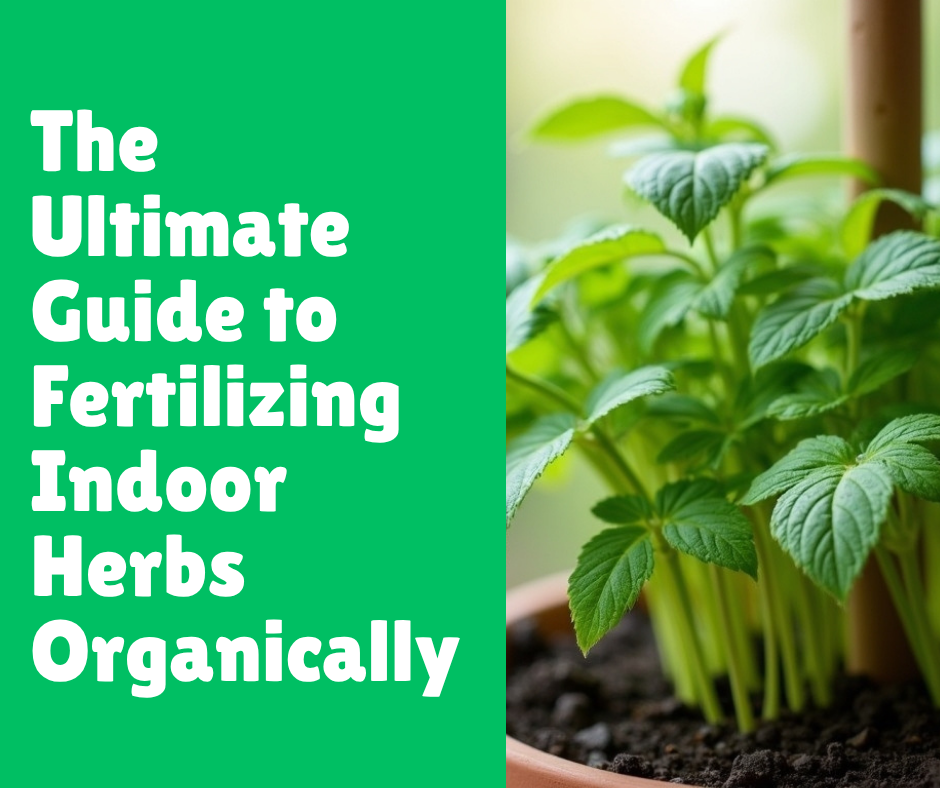
The Ultimate Guide to Fertilizing Indoor Herbs Organically
Post Disclaimer
Content on this site is for educational use only and not a substitute for medical advice. Herbal remedies are based on traditional knowledge and not medical recommendations. Please consult a healthcare professional before trying any herb. We do not assume responsibility for any outcomes or adverse effects resulting from the use of information provided here.
I remember the first time I brought home a little basil plant. I was so proud. I put it on my sunniest windowsill, watered it faithfully, and dreamed of endless pesto. A few weeks later, my pride and joy looked… sad.
The leaves were yellowing, the stems were spindly, and it certainly wasn’t producing enough leaves for a single serving of pasta, let alone “endless” anything. I was doing everything right or so I thought. Sun? Check. Water? Check. What was I missing?
It turns out my little plant was starving. I had assumed that the soil it came in was enough, but container-grown plants, especially hardworking herbs, are voracious eaters. They quickly use up the nutrients in their limited soil volume.
That’s when I fell down the rabbit hole of fertilizing, and more specifically, organic fertilizing. I wanted my kitchen herbs to be as clean and healthy as possible, which meant no synthetic chemicals.
If you’re reading this, you probably have a similar story or want to avoid one. You want lush, vibrant indoor herbs that you can snip from and use with confidence. The secret isn’t just sun and water; it’s providing the right food.
And trust me, once you get the hang of it, you’ll feel like a plant whisperer. Let’s get into how you can feed your indoor herbs the right way, using nothing but the good stuff.
Understanding the “Why” and “What” of Organic Fertilizing
Before we start mixing up concoctions, let’s talk about the basics. Why do your herbs even need fertilizer, and what does “organic” really mean in this context? Think of fertilizer as a multivitamin for your plants. It provides the essential macronutrients and micronutrients they can’t get from sunlight and water alone.
The Big Three: N-P-K Explained
You’ve probably seen three numbers on fertilizer packages, like 3-1-2 or 5-5-5. This is the N-P-K ratio, and it represents the percentage of three key macronutrients:
- Nitrogen (N): This is all about leafy growth. For herbs like basil, parsley, cilantro, and mint, where the leaves are what you harvest, nitrogen is the most important player. It’s responsible for that lush, green, vigorous foliage. A nitrogen deficiency often shows up as yellowing leaves, especially on the older, lower parts of the plant.
- Phosphorus (P): Phosphorus is the powerhouse for roots, flowers, and fruits. It helps your plants establish a strong root system, which is crucial for absorbing water and other nutrients. For flowering herbs like chamomile or fruiting ones like chili peppers (yes, they’re technically a fruit!), phosphorus is key.
- Potassium (K): Think of potassium as the plant’s immune system booster. It helps with overall plant health, disease resistance, and water regulation. It strengthens cell walls and makes the plant more resilient to stress, like that one time you forgot to water it for a week. We’ve all been there.
For most indoor herbs, you want a balanced fertilizer or one that is slightly higher in nitrogen to encourage all that delicious leaf production.
Why Go Organic? Isn’t Fertilizer Just Fertilizer?
So, why not just grab any all-purpose plant food from the store? You could, but when you’re growing something you plan to eat, the source of those nutrients matters.
Synthetic fertilizers are like a shot of caffeine. They deliver a fast, concentrated dose of nutrients that can lead to rapid, sometimes weak, growth. They feed the plant directly but do absolutely nothing for the soil.
Over time, they can even lead to a buildup of salts in your potting mix, which can burn plant roots and create a toxic environment.
Organic fertilizers, on the other hand, are more like a balanced, wholesome meal. They are derived from natural sources things that were once living, like plants, animal manures, and minerals.
They work by feeding the beneficial microorganisms in the soil. These microbes then break down the organic matter into a form that the plant’s roots can absorb.
This process is slower, more sustainable, and it builds a healthy, living soil ecosystem right there in your pot. It’s a holistic approach that nurtures both the plant and its environment.
Plus, there’s zero risk of introducing weird synthetic chemicals into your food. That’s a huge win in my book.
Your Arsenal of Organic Fertilizers: Liquid Feeds vs. Granular Options
Alright, you’re sold on organic. Now, what do you actually use? Organic fertilizers for indoor herbs generally fall into two categories: liquid feeds and granular (or solid) amendments. I use a combination of both for the best results.
Liquid Organic Fertilizers: The Quick Boost
Liquid fertilizers are my go-to for regular feeding during the growing season. They are fast-acting (for an organic product) because the nutrients are already in a liquid form, ready for the roots to soak up. You typically dilute them in water and apply them during your regular watering routine.
Top Choices for Liquid Feeds:
- Fish Emulsion: This is the smelly-but-oh-so-effective champion of organic gardening. It’s made from fermented fish parts and is an excellent source of nitrogen. Yes, it stinks like a fishing dock for a few hours after you use it, but your herbs will absolutely love you for it. The smell dissipates, I promise! Just be sure to get a deodorized version if you’re sensitive, though I find the classic stuff works best. It typically has an N-P-K ratio around 5-1-1.
- Compost Tea: If you have an outdoor compost bin, you’re sitting on a goldmine. Compost tea is made by steeping finished compost in water (often with molasses and an aerator) to extract all the beneficial microbes and soluble nutrients. It’s less a fertilizer and more a probiotic for your soil, inoculating it with life. You can also buy compost tea “bags” that you just steep in your watering can.
- Worm Casting Tea: This is the premium, five-star version of compost tea. Worm castings (ahem, worm poop) are one of the most incredible soil amendments on the planet. Making a tea from them is simple: just add a handful of castings to your watering can, let them steep for a few hours or overnight, and then water your plants. It’s packed with a gentle and diverse range of nutrients and beneficial bacteria.
- Seaweed/Kelp Fertilizer: This is the ultimate plant supplement. While it’s generally low in N-P-K, it is packed with over 60 micronutrients, minerals, and growth hormones that are hard to find elsewhere. I think of kelp as the multivitamin that rounds everything out. It helps with root development, stress resistance, and overall plant vigor. I often mix it with fish emulsion for a complete meal.
Granular Organic Fertilizers: The Slow and Steady Feast
Granular options are solid amendments that you mix into your potting soil when you first plant your herbs or “top dress” (sprinkle on the soil surface) a few times a year. They break down slowly, providing a steady, gentle release of nutrients over several months.
My Favorite Granular Amendments:
- Worm Castings: Yes, them again! They’re so good they belong in both categories. Mixing a generous amount (about 20-25% of your total mix) into your potting soil when you plant gives your herbs an amazing start in life. The nutrients are readily available and so gentle they will never burn your plants.
- Bat Guano: Don’t be scared by the name. Bat guano is a potent and highly effective organic fertilizer. High-nitrogen guano is excellent for leafy herbs, while high-phosphorus guano is better for flowering or fruiting plants. A little goes a very long way, so follow the package directions carefully.
- Alfalfa Meal: This is a fantastic, plant-based option that’s rich in nitrogen and contains a natural growth stimulant called triacontanol. It’s a great “activator” for your potting soil, encouraging microbial activity and providing a slow-release source of food.
- Bone Meal & Blood Meal: These are classic amendments derived from the meatpacking industry. Bone meal is a superb source of phosphorus and calcium, great for root strength. Blood meal is one of the highest natural sources of nitrogen you can find. I use these sparingly for indoor herbs, as they can be quite potent and might attract curious pets. If you use them, be sure to mix them well into the soil.
How to Fertilize: A Step-by-Step Guide and Feeding Schedule
Knowing what to use is half the battle. Knowing how and when to use it is the other half. Over-fertilizing, even with organic options, can be just as harmful as under-fertilizing. Here’s the system I’ve perfected over years of growing herbs indoors.
Step 1: Start with Great Soil
You can’t out-fertilize bad soil. Your journey to happy herbs begins with a high-quality potting mix. Don’t just use garden soil, which is too dense and can harbor pests. I create my own mix, and I highly recommend you do too. It’s easy!
My Personal Indoor Herb Soil Recipe:
- 2 parts high-quality organic potting mix: This is your base.
- 1 part perlite or pumice: This provides excellent drainage and aeration, preventing root rot.
- 1 part worm castings or finished compost: This is your initial slow-release fertilizer and microbial inoculant.
Mix these components thoroughly. This starting blend gives your herbs a fantastic foundation and an initial food source to draw from for the first month or two.
Step 2: The Regular Feeding Routine
Indoor herbs generally need to be fed during their active growing period, which for most of us is spring and summer. They slow down in the fall and winter when there’s less light, and their nutrient needs decrease significantly.
My General Feeding Schedule (Spring/Summer):
- Frequency: Every 2-4 weeks. I find every 3 weeks is the sweet spot for my herbs.
- What I Use: A diluted liquid organic fertilizer. My favorite cocktail is a mix of fish emulsion (for the nitrogen) and liquid kelp (for the micronutrients).
- Dilution is Key: This is super important. Always, and I mean always, dilute your liquid fertilizers to half or even a quarter of the strength recommended on the bottle for houseplants. Indoor herbs are sensitive, and it’s much better to under-feed than to over-feed. I use a quarter-strength solution every few weeks, and it works perfectly.
- How to Apply: Water your plant with plain water first. You want the soil to be slightly moist, not bone dry. This prevents the fertilizer from shocking the roots. Then, apply your diluted fertilizer solution until it begins to run out of the drainage holes. This ensures the entire root zone gets a drink.
Step 3: The “Off-Season” (Fall/Winter)
When the days get shorter and your home gets less natural light, your herbs will naturally slow their growth. Pushing them to grow with fertilizer during this time will only result in weak, leggy stems.
- Reduce Feeding Drastically: I cut back my fertilizing schedule to once every 6-8 weeks during the fall and winter. Sometimes I don’t fertilize at all from December to February if the plants look happy.
- Listen to Your Plants: If your basil is still putting out new leaves like crazy under a grow light, it might need a light feeding. If your rosemary has stopped growing entirely, leave it alone. The plants will tell you what they need.
Step 4: Top-Dressing for a Long-Term Boost
Twice a year, once in early spring and again in mid-summer, I give my herbs a little extra love with a top-dressing of granular amendments.
- What to Do: Gently scratch the top inch of soil around the plant. Be careful not to disturb the roots too much.
- What to Add: Sprinkle a thin layer (maybe a tablespoon or two for a 6-inch pot) of worm castings or alfalfa meal on the surface.
- Finishing Up: Mix it lightly into that top layer of soil and water it in well. This will provide a slow, steady release of nutrients that complements your liquid feeding routine.
Common Mistakes to Avoid (That I’ve Definitely Made)
We learn best from our mistakes, right? Well, let me save you some trouble by sharing a few of my own “learning experiences.”
- The “More is Better” Fallacy: My first instinct was to feed my sad, yellowing plants a huge dose of fertilizer to “fix” them quickly. This is a terrible idea. Over-fertilizing can cause fertilizer burn, where the excess salts in the fertilizer pull moisture out of the roots, causing them to shrivel and die. Symptoms include brown, crispy leaf edges and sudden wilting. Always start with a weak solution.
- Fertilizing a Stressed Plant: If your plant is wilting from being too dry or is suffering from a pest infestation, fertilizer is not the answer. It’s like trying to force-feed someone who has the flu. Address the primary stressor first—water the plant, deal with the pests—and wait for it to recover before you offer it food.
- Ignoring the Season: I used to fertilize on a strict calendar schedule, regardless of the time of year. My poor herbs were getting pushed to grow in the dead of winter and ended up all stretched out and weak. Pay attention to the seasons and your plant’s growth rate. Less light means less growth, which means less need for food.
- Forgetting to Leach the Soil: Even with organic fertilizers, salts and minerals can build up in the soil over time. Once every few months, it’s a good idea to “leach” your pots. Take the plant to a sink or tub and water it thoroughly with plain water, letting it flow freely through the drainage holes for several minutes. This flushes out any excess buildup.
- Using the Same Fertilizer for Everything: While a balanced fertilizer is a good start, remember that different herbs have different needs. Leafy greens like basil and parsley are nitrogen-hungry. Woody, Mediterranean herbs like rosemary, thyme, and oregano prefer leaner soil and less fertilizer. They thrive on a bit of neglect. Over-fertilizing them will result in less fragrant and flavorful oils.
Conclusion: You’ve Got This!
Feeding your indoor herbs organically might seem complex at first, but it quickly becomes an intuitive and rewarding part of your plant care routine. It’s about creating a partnership with your plants and the living soil they grow in.
The real joy of growing your own herbs is watching them thrive and knowing you’re about to add something pure and delicious to your next meal. Don’t be afraid to experiment a little. See what your plants respond to. The most important thing is to start.
Now I’d love to hear from you! What are your favorite organic fertilizers for your indoor garden? Have you had any fertilizing disasters or amazing successes? Share your stories and questions in the comments below!
Frequently Asked Questions (FAQs)
Can I use my outdoor vegetable garden fertilizer on my indoor herbs?
You can, but with caution. Outdoor fertilizers are often much stronger and formulated for in-ground plants. If you use one, you absolutely must dilute it to at least a quarter of its recommended strength to avoid burning your potted herbs.
My basil leaves are turning yellow from the bottom up. Is this a fertilizer issue?
It’s very likely a nitrogen deficiency! Nitrogen is a “mobile” nutrient, meaning the plant can move it from older leaves to new growth. When there isn’t enough nitrogen to go around, the plant sacrifices the old, lower leaves to feed the new, upper ones.
I just repotted my herbs into fresh soil with worm castings. When should I start fertilizing?
Great question! You should wait about 4-6 weeks before you start your liquid fertilizing routine. The fresh soil and worm castings will provide plenty of nutrients for the plant to get established. Starting to fertilize too soon can overwhelm the young roots.
Is it possible to make my own fertilizer at home?
Absolutely! The easiest “DIY” fertilizer is to use your used coffee grounds or crushed eggshells. Coffee grounds provide a gentle nitrogen boost, while eggshells add calcium. However, don’t rely on these alone. They are more like gentle supplements. You can sprinkle a small amount of cooled coffee grounds on the soil surface or mix them in.
My rosemary and thyme don’t seem to be growing much, even with fertilizer. What’s wrong?
This is a classic case of killing with kindness! Woody, Mediterranean herbs like rosemary, thyme, oregano, and lavender evolved in poor, rocky, dry soils. They do not like rich soil or a lot of fertilizer. Over-feeding them can reduce the concentration of their essential oils (making them less fragrant and flavorful) and even lead to root rot.