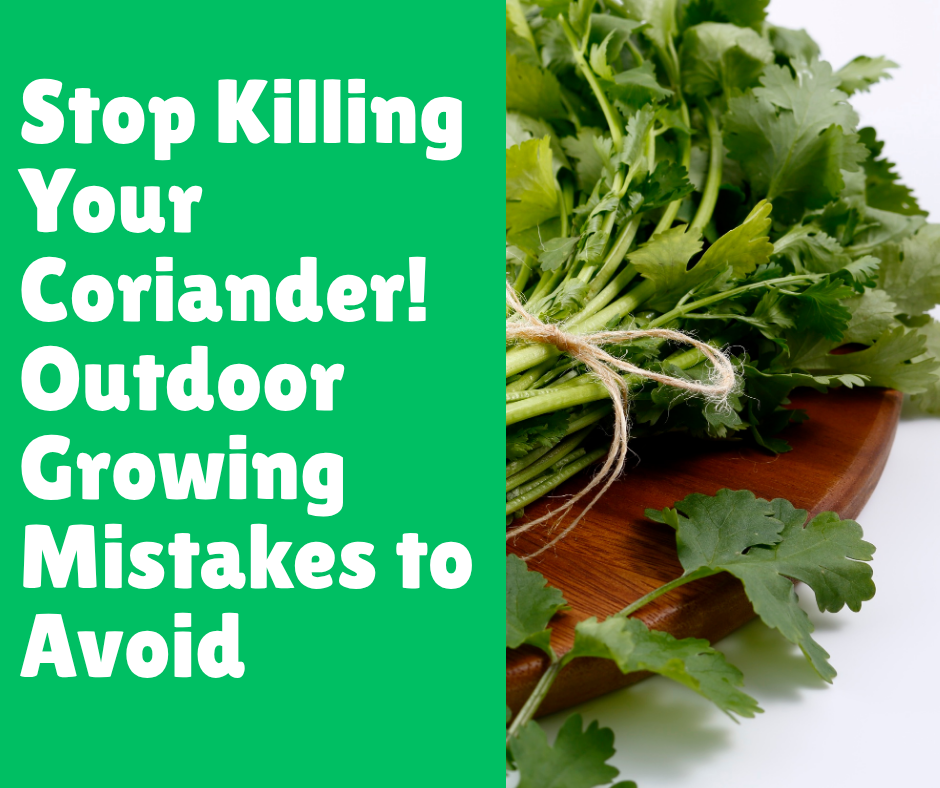
Stop Killing Your Coriander! Outdoor Growing Mistakes to Avoid
Post Disclaimer
Content on this site is for educational use only and not a substitute for medical advice. Herbal remedies are based on traditional knowledge and not medical recommendations. Please consult a healthcare professional before trying any herb. We do not assume responsibility for any outcomes or adverse effects resulting from the use of information provided here.
I still remember the first time I tried to grow coriander. I had visions of an endless supply, ready for my homemade curries and salsas. I bought a small pot from the supermarket, stuck it on my sunniest windowsill, and… watched it die a slow, tragic death within two weeks.
I tried again, this time with seeds, planting them in a neat little row in my sun-drenched garden bed. The result? A flash of green, followed by a bunch of leggy, bitter-tasting stalks that bolted before I could even say “guacamole.”
For years, I was convinced I had some sort of anti-coriander curse. It seemed like the one herb that was determined to defy me at every turn. But I’m stubborn. I dove into research, talked to fellow gardeners, and, through a whole lot of trial and error (mostly error, if I’m being honest), I finally cracked the code.
Growing this notoriously fussy herb outdoors is not only possible but incredibly rewarding. You just have to understand what it doesn’t like.
So, if you’re tired of your coriander giving up on life the second you turn your back, you’re in the right place. We’re going to walk through the common pitfalls and how to sidestep them like a pro. Forget everything you thought you knew, and let’s get you that lush, fragrant coriander patch you’ve been dreaming of.
Understanding the Divaness of Coriander
Before we get into the mistakes, we need a little heart-to-heart about coriander’s personality. This isn’t a tough-as-nails herb like rosemary or mint that will grow even if you neglect it.
Coriander (or cilantro, as the leaves are often called in North America) is a bit of a diva. It has very specific preferences, and if you ignore them, it will throw a tantrum. The biggest tantrum? Bolting.
Bolting is when the plant gives up on producing lovely, flavorful leaves and instead focuses all its energy on flowering and setting seed. It’s a survival mechanism. When coriander gets stressed, it thinks, “My time is up! I must reproduce NOW!”
The result for you is a plant with a thick, tough central stalk, sparse leaves, and a bitter, unpleasant flavor. Our entire goal is to keep it so happy and comfortable that it forgets it’s supposed to do that.
So, what stresses it out?
- Too much heat.
- Too much direct sun.
- Not enough water.
- Root disturbance.
Notice a theme? Coriander is a cool-season herb. It hates the long, hot days of mid-summer. This one fact is probably responsible for 90% of coriander-growing failures.
Mistake 1: Planting at the Wrong Time of Year
This is, without a doubt, the number one reason people fail with coriander. Most gardening guides give you a generic “plant after the last frost” instruction. For many plants, that’s great advice. For coriander? It’s a recipe for disaster in most climates.
If you plant coriander seeds in late spring, they will germinate just as the days are getting longer and hotter. By the time the plant is established, it’s peak summer.
The intense heat and long hours of daylight are a giant, flashing neon sign telling your coriander to bolt. You might get one tiny harvest before it gives up. It’s a complete waste of time and effort.
The Right Way: Embrace the Shoulder Seasons
The secret to happy coriander is to grow it during the cooler “shoulder seasons” of the year: spring and autumn.
Step-by-Step Planting Schedule:
- For a Spring Harvest: Sow your first seeds as soon as the soil can be worked, even if there’s still a risk of a light frost. Coriander is surprisingly frost-tolerant. Planting this early means the plant will mature during the cool, mild days of spring, giving you weeks of leafy growth before the summer heat arrives.
- For an Autumn/Winter Harvest: This is my personal favorite. Wait until the scorching heat of summer has passed. Sow seeds from late summer through early autumn. The soil is still warm, promoting quick germination, but the cooling temperatures and shortening days will keep the plants in a vegetative (leafy) state for a very long time. In milder climates, you can often harvest all winter long.
- Succession Sow: Don’t plant all your seeds at once! Coriander has a relatively short harvest window before it eventually bolts, no matter how perfect the conditions. For a continuous supply, sow a new small batch of seeds every 2-3 weeks during your chosen growing season. This is the single best trick for having fresh coriander whenever you want it.
By timing your planting correctly, you’re not fighting against the plant’s nature; you’re working with it. It’s a game-changer, I promise.
Mistake 2: Choosing the Wrong Location (It’s Not a Sun Worshipper)
Here’s another piece of common gardening advice that leads coriander-lovers astray: “Plant in full sun.” Sure, most herbs and veggies love to bake in the sun all day. Coriander, however, is not most herbs. It’s the goth kid of the herb garden who prefers a bit of shade and quiet contemplation.
Giving coriander 8+ hours of blistering, direct sunlight is like putting it on an express train to Boltingville. The heat stress on the leaves and soil is just too much for this cool-season crop.
Finding the Perfect Spot: The Art of Dappled Light
You need to find a spot that gets some sun but is protected from the harshest afternoon rays. Think about the microclimates in your garden.
- The Ideal Location: A spot that gets 4-5 hours of morning sun and then dappled or full shade in the afternoon is the absolute sweet spot. The east side of your house, a fence, or a wall is often perfect for this.
- Create Your Own Shade: Don’t have a naturally shady spot? No problem. Use taller plants to your advantage. I love planting my coriander rows next to my climbing beans or tall tomato plants. As the summer progresses and the sun gets more intense, the larger plants provide natural, cooling shade for the coriander below. FYI, this is a classic companion planting technique called “intercropping.”
- Container Growing Advantage: If you’re growing in pots, you have the ultimate advantage: you can move them! Start them in a sunnier spot in early spring and then move them to a shadier patio or under a tree as the season heats up. This level of control is amazing for fussy plants.
I once had a rogue coriander seed sprout in the shadow of a large hosta plant. I completely forgot about it until late July when I was weeding. To my shock, it was a huge, lush, green bush that hadn’t even thought about bolting, while the ones I had intentionally planted were long dead. It was a perfect lesson in the importance of afternoon shade.
Mistake 3: Abusing Its Delicate Roots
Coriander has a taproot system. This means it sends down one main, central root deep into the soil. This taproot is sensitive and absolutely hates being disturbed. This is why those supermarket herb pots are doomed from the start.
They are typically crammed with dozens of seedlings whose roots are a tangled mess. When you try to transplant them, you cause so much root shock that the plants immediately panic and bolt.
The same goes for starting seeds in tiny seed trays and then transplanting them into the garden. While it can work if you’re incredibly careful, it’s an unnecessary risk.
The Golden Rule: Sow Directly
To avoid any root drama, the best practice is always to sow seeds directly where they are going to grow.
- In the Ground: Prepare your garden bed, enrich it with some compost, and sow the seeds about half an inch deep. Don’t worry about perfect spacing; you can thin them out later. Just sprinkle them where you want them to be.
- In Containers: If you’re using pots, use the final pot from the very beginning. Choose a container that is at least 8-10 inches deep to give that taproot plenty of room to grow downwards. A shallow pot is another cause of stress. Fill it with good quality potting mix and sow your seeds directly on top.
What about thinning? When your seedlings are a couple of inches tall, you will need to thin them out. It feels brutal, I know. But crowding causes competition for water and nutrients, which you guessed it causes stress.
Snip the weaker seedlings at the soil line with a pair of scissors instead of pulling them out. This avoids disturbing the roots of the seedlings you want to keep. The best part? The thinnings are your first micro-harvest! 🙂
Mistake 4: Inconsistent Watering and Poor Soil Prep
Remember how coriander gets stressed easily? Well, nothing screams “PANIC!” to a plant-like suddenly going bone dry. One hot afternoon without enough moisture can be enough to trigger the bolting process. On the flip side, leaving it in heavy, waterlogged soil can lead to root rot. It’s a delicate balance.
The Path to Soil and Water Bliss
Your goal is consistently moist, but not soggy, soil.
1. Soil Preparation is Key:
Coriander needs well-draining soil that can still retain moisture. Heavy clay soil that stays wet is bad. Sandy soil that dries out in an hour is also bad.
- The Fix: Before you plant, amend your soil generously with compost or well-rotted manure. This is the magic ingredient. Compost improves drainage in clay soil and helps retain moisture in sandy soil. It creates the perfect, loamy texture that coriander roots love.
2. The Art of Watering:
- Check the Soil: Don’t water on a schedule. Water when the soil needs it. The best way to know is to stick your finger about an inch into the soil near the plants. If it feels dry, it’s time to water. If it’s still damp, wait another day.
- Water Deeply: When you do water, give the plants a good, deep soak. This encourages the taproot to grow deeper into the soil where it’s cooler and moisture levels are more stable. Shallow, frequent watering keeps the roots near the hot surface.
- Mulch is Your Best Friend: Once your seedlings are a few inches tall, apply a 1-2 inch layer of mulch around the plants. Use something light like straw, shredded leaves, or grass clippings. Mulch is a game-changer because it:
- Keeps the soil cool.
- Drastically reduces water evaporation.
- Suppresses weeds that compete for resources
Mistake 5: Harvesting Incorrectly (or Not at All!)
How you harvest your coriander makes a huge difference in how long the plant will remain productive. Many beginners make one of two mistakes: they either take way too much at once, shocking the plant, or they barely harvest at all.
Letting the plant get overgrown without regular trimming can actually signal to it that its job is done, sometimes encouraging it to move on to the flowering stage.
The “Cut and Come Again” Method
You should start harvesting as soon as the plant is about 6 inches tall and looks sturdy. The correct way to harvest is the “cut and come again” method.
- Harvest from the Outside: Always take the largest, outermost leaves first. Use scissors or just pinch them off with your fingers at the base of their stem.
- Leave the Center Intact: The new growth comes from the center crown of the plant. Never cut out the central growing point. As long as you leave the inner leaves and the crown untouched, the plant will continue to produce new leaves from the center for you to harvest.
- Don’t Take More Than a Third: As a general rule, never harvest more than one-third of the plant’s total leaves at any one time. This ensures it has enough foliage left to photosynthesize and recover quickly.
Regularly harvesting in this manner actually encourages the plant to become bushier and produce more leaves. It keeps it in a state of perpetual youth, which is exactly what we want.
Your Coriander Success Story Awaits
Growing coriander outdoors doesn’t have to be a frustrating mystery. It’s not about having a “green thumb”; it’s about understanding what this particular plant wants and giving it just that. It wants to grow in the cool weather of spring and fall, it wants its roots left alone, and it craves the relief of afternoon shade. It’s a simple plant with specific needs.
Let’s quickly recap the keys to the kingdom:
- Plant at the right time: Early spring or late summer/early autumn are your best friends.
- Location, location, location: Morning sun and afternoon shade is the perfect combo.
- Sow directly: Don’t mess with its sensitive taproot. Plant seeds where they will live permanently.
- Keep it consistently moist: Use compost and mulch to create happy soil that doesn’t dry out too fast.
- Harvest smartly: Use the “cut and come again” method to encourage bushy, long-lasting growth.
I went from being a serial coriander killer to having a steady supply for months on end. You can absolutely do the same. Ditch the old, generic advice and give these methods a try.
Now I want to hear from you! What has been your biggest struggle with growing coriander? Have you had a surprise success story like my shady hosta incident? Drop a comment below and let’s share our gardening war stories. Happy growing!
FAQs for the Aspiring Coriander Grower
My coriander is tall and skinny. What did I do wrong?
This is called being “leggy.” It’s usually caused by not enough light. While coriander doesn’t like intense, direct sun, it still needs bright, indirect light to grow strong. Leggy growth can also happen if seedlings are too crowded and are stretching to compete for light. Make sure to thin them to about 3-4 inches apart.
Can I stop my coriander from bolting once it has started?
Honestly, no. Once that central flower stalk starts shooting up, the game is over for the leaves. The flavor will quickly turn bitter. You can try snipping the flower stalk off to buy yourself a few more days, but you can’t reverse the process. My advice? Let it flower!
What are some good “slow-bolt” coriander varieties?
Great question! While all coriander will eventually bolt, some varieties are bred to be more heat-tolerant and last longer. Look for seeds labeled “slow-bolt,” “long-standing,” or names like ‘Calypso’, ‘Leisure’, or ‘Cruiser’.
Should I fertilize my coriander?
If you prepared your soil with plenty of compost before planting, you shouldn’t need to. Coriander is not a heavy feeder. In fact, too much nitrogen-rich fertilizer can produce rapid, weak growth and a less intense flavor. Stick to good soil prep from the start.