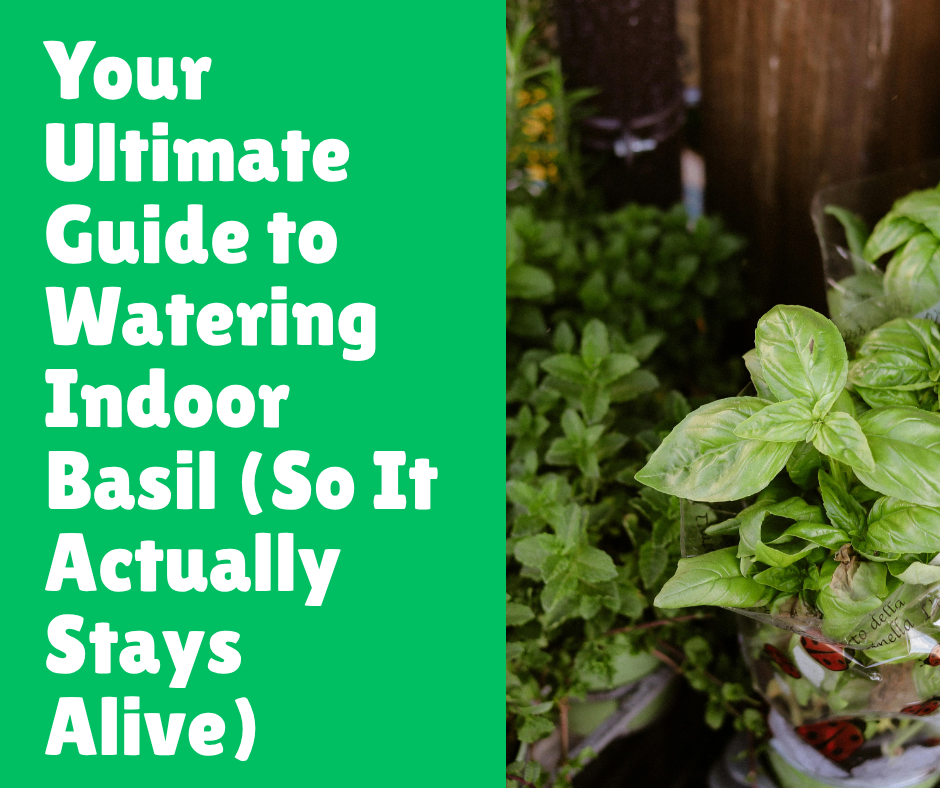
Your Ultimate Guide to Watering Indoor Basil
Post Disclaimer
Content on this site is for educational use only and not a substitute for medical advice. Herbal remedies are based on traditional knowledge and not medical recommendations. Please consult a healthcare professional before trying any herb. We do not assume responsibility for any outcomes or adverse effects resulting from the use of information provided here.
I think we can all agree on one thing: store-bought dried basil is a pale, sad ghost of its fresh counterpart. That’s why so many of us try to grow our own basil indoors.
We have beautiful visions of snipping fresh, aromatic leaves for our pasta sauce or a Caprese salad whenever the mood strikes. But then, reality hits.
Your perky, vibrant basil plant starts looking… well, a little pathetic. It’s either a droopy, dramatic mess or a crispy, yellowing tragedy.
What’s the deal? More often than not, the culprit is water. It’s the Goldilocks of plant care too much is a disaster, too little is a crisis, but getting it just right feels like cracking some ancient code. I’ve been there.
I’ve killed more basil plants than I care to admit, and almost every single one of my early failures came down to watering mistakes. But over the years, through much trial, error, and a few conversations with my suffering plants, I’ve finally figured it out.
So, if you’re tired of your kitchen windowsill looking like a plant graveyard, you’re in the right place. We’re going to dive deep into exactly how often to water your indoor basil, but more importantly, we’re going to learn how to know what your specific plant needs. Forget rigid schedules; we’re becoming plant whisperers today.
Ditching the Schedule: Why “Every X Days” Doesn’t Work
Let’s get one thing straight right away: if someone tells you to water your basil “every three days,” you should politely smile, nod, and then completely ignore that advice. It’s not that they’re trying to lead you astray; it’s just that rigid watering schedules are the number one reason indoor herbs meet their untimely demise.
Why is a fixed schedule so bad? Well, think about it. Is every day in your own life the same? Some days are hot and sunny, others are cool and cloudy. Your basil plant’s world is just as variable. A fixed schedule fails to account for the multiple factors that dictate how thirsty your plant actually is at any given moment.
The Factors That Control Your Basil’s Thirst
Your basil’s water needs are a moving target, influenced by a whole cocktail of environmental conditions. To truly master basil care, you need to be a detective, observing these clues.
- Pot Size and Material: A tiny 4-inch plastic pot will dry out infinitely faster than a large 10-inch terracotta one. Terracotta is porous, meaning it wicks moisture from the soil, causing it to dry out quicker. Plastic and glazed ceramic pots, on the other hand, hold onto water for much longer. My personal preference for basil is terracotta because it breathes and makes overwatering much harder, but it does mean I have to check on it more frequently.
- Light Exposure: Is your basil basking in a sun-drenched south-facing window for six hours a day? If so, it’s going to be photosynthesizing like crazy and using up water much faster. A basil plant sitting in a less bright, north-facing window will be far less thirsty. More light equals more growth, which equals more water consumption.
- Ambient Temperature and Humidity: A warm, dry room, especially one with forced-air heating in the winter, will suck the moisture right out of your plant’s soil and leaves. Conversely, a cooler, more humid environment (like a bathroom with a window) means the soil will stay damp for longer. I once moved my basil from the kitchen to a sunnier but much hotter living room, and its watering needs practically doubled overnight.
- Soil Type and Quality: Not all potting mixes are created equal. A dense, heavy soil will retain water and can easily become a swampy mess. Basil demands well-draining soil. If your mix is packed with peat moss, it might hold too much water. A good mix with perlite or vermiculite will allow excess water to escape, promoting healthy roots.
See what I mean? Telling you to water on a specific day is like telling you to wear a winter coat on July 4th just because the calendar says so. It makes no sense. The only reliable way to know if your basil needs a drink is to check.
The Art of “The Finger Test”: Your Most Reliable Tool
Forget fancy moisture meters and complicated gadgets. Your most effective tool for checking your basil’s soil is, and always will be, your own finger. It’s free, it’s always with you, and it gives you the most accurate reading of the conditions where it matters most: at the root level. I swear by this method, and it has never failed me.
Here’s the step-by-step process. It’s so simple, you’ll wonder why you ever did it any other way.
Step-by-Step: Mastering the Finger Test
- Choose Your Finger: Your index finger is the classic choice. Make sure it’s clean and dry.
- The Initial Poke: Gently insert your finger into the soil, away from the main stem to avoid disturbing the roots. Don’t just press the surface; you need to go deeper.
- Go Deeper: Push your finger down into the soil until it’s about 1 to 2 inches deep. For a smaller pot, one inch is fine. For a larger, deeper pot, you might want to go closer to two inches. This is crucial because the surface soil can be deceivingly dry while the root zone is still perfectly moist.
- Feel the Soil: Now, pay attention. What do you feel?
- If the soil feels damp or wet: Your basil is happy. Do not water it. Put the watering can down and back away slowly. Watering now is a one-way ticket to root rot.
- If the soil feels mostly dry, with maybe a hint of coolness: It’s time to water. The soil shouldn’t be bone-dry and pulling away from the sides of the pot, but it should definitely feel dry to the touch at that depth.
- Repeat as Needed: How often should you perform this test? In the beginning, check every day or two. This will help you get into a rhythm and understand your plant’s unique needs in your specific environment. Soon, you’ll develop an instinct and know that in your sunny kitchen, you probably need to check every two days, while in the winter, it might be closer to every four or five.
Visual Cues: When Your Basil “Talks” to You
Besides the finger test, your basil will give you some pretty clear, albeit dramatic, visual signals. Learning to read them can help you fine-tune your care.
- The Droop (Underwatering): This is the most common sign. Basil is a notorious drama queen. If it’s thirsty, its leaves will wilt and droop quite noticeably. It looks sad and pathetic, but don’t panic! This is just its way of screaming for a drink. A good watering will usually have it perking back up within an hour or two. If you see this, you’ve waited a tad too long, but it’s easily fixable.
- Yellowing Leaves (Overwatering): This is the more sinister sign. If the lower leaves on the stem are turning yellow and the soil is consistently damp, you’re overwatering. This means the roots are suffocating and can’t absorb nutrients, leading to yellowing foliage. Unlike drooping, this is harder to reverse.
- Crispy, Brown Edges (Severe Underwatering): If you ignore the drooping for too long, the leaves will start to feel dry and crispy at the edges. This is tissue damage from dehydration. Those leaves won’t recover, but you can still save the plant if you act fast.
The goal is to water just before the dramatic droop happens. The finger test is your key to achieving this perfect timing.
The Right Way to Water: It’s Not Just About “When”
Okay, so you’ve performed the finger test and confirmed it’s go-time. Now what? Just dumping some water on top isn’t the best approach. How you water is just as important as when. The goal is to moisten the entire root ball evenly without creating a swamp.
The Deep Watering Method (Bottom-Up or Top-Down)
I’m a huge fan of thorough, deep watering sessions rather than giving the plant little sips every day. Little sips encourage shallow root growth, making the plant weaker and more susceptible to drying out. Deep watering encourages the roots to grow down deep, creating a stronger, more resilient plant.
There are two excellent ways to achieve a deep watering.
Option 1: The Top-Down Drench
This is the traditional method, but there’s a right way to do it.
- Move to the Sink: Take your basil pot to a sink or bathtub. This is non-negotiable, IMO. It prevents messes and, more importantly, allows you to water properly.
- Water Thoroughly: Using lukewarm or room-temperature water (plants don’t like an icy shock any more than we do), slowly and gently pour water over the entire surface of the soil. Don’t just water one spot; move the stream around.
- Keep Watering Until…: Continue watering until you see a generous amount of water flowing freely from the drainage holes at the bottom of the pot. This is the most critical step. It ensures the entire root ball is saturated and flushes out any excess mineral salts that can build up in the soil.
- Let it Drain Completely: This is just as important! Let the pot sit in the sink for 10-20 minutes to allow all excess water to drip out. You want the soil to be moist, not waterlogged.
- Return to its Home: Once it has stopped dripping, you can return your basil to its saucer and its sunny spot. Never, ever let your basil pot sit in a saucer full of water. That’s a direct invitation for root rot to come to the party.
Option 2: The Bottom-Up Soak (My Personal Favorite)
I have to admit, I’ve become a bottom-watering convert. It’s a bit more passive and feels almost foolproof. This method allows the soil and roots to draw up exactly as much water as they need.
- Find a Container: Get a bowl, tray, or even just your sink. It needs to be large enough to hold your basil pot.
- Fill with Water: Pour about 1-2 inches of room-temperature water into the container.
- Place Your Plant Inside: Set your basil pot (which MUST have drainage holes) into the water.
- Let it Soak: Now, you just wait. The magic of capillary action will pull the water up through the drainage holes and into the soil. Let it sit for about 20-30 minutes. You’ll know it’s done when the top surface of the soil feels slightly damp to the touch.
- Drain and Return: Once the top is damp, remove the pot from the water, let it drain for a few minutes, and return it to its spot. This technique guarantees the roots get a deep drink without ever compacting the soil from above. FYI, this method is a lifesaver for fussy plants.
Common (and Deadly) Basil Watering Mistakes to Avoid
We learn from our mistakes, right? Well, let me save you some trouble by sharing the “Basil Hall of Shame” the most common watering errors I’ve made and seen others make. Avoid these at all costs.
- The “Little Sip” Mistake: As mentioned, giving your plant a small splash of water every day is terrible practice. It leads to shallow roots and keeps the top layer of soil constantly wet, which can attract pests like fungus gnats, while the bottom roots remain thirsty. Always water deeply and infrequently.
- Letting it Sit in Water: This is the cardinal sin of houseplant care. A saucer full of water means the bottom of the pot is submerged. The roots can’t breathe, and they will begin to rot. This condition, called “wet feet,” is one of the fastest ways to kill a basil plant. Always empty the drainage saucer.
- Using Ice Cold Water: Pouring frigid water from the tap onto your plant’s roots can shock the system, stunting growth. Plants are living things, and they prefer water that is lukewarm or at room temperature.
- Watering the Leaves: Basil is prone to fungal diseases like downy mildew. When you splash water all over the leaves and they stay wet, especially in a low-airflow environment, you’re creating the perfect breeding ground for these issues. Always aim for the soil, not the foliage. If you do get the leaves wet, try to ensure there’s good air circulation to help them dry quickly.
- Forgetting Drainage is Everything: I cannot say this enough. If your pot does not have a drainage hole, you are setting your basil up for failure. It’s not a question of if it will die from root rot, but when. If you have a beautiful decorative pot with no hole, use it as a cachepot simply place the ugly plastic nursery pot with drainage inside it.
Conclusion: You’ve Got This!
Watering indoor basil doesn’t have to be a source of anxiety. Once you throw out the idea of a rigid schedule and start observing your plant, it all becomes surprisingly simple. Your basil plant will tell you everything you need to know, either through the feel of its soil or its “I’m thirsty!” droop.
Growing basil indoors is incredibly rewarding. There’s nothing quite like the smell and taste of fresh-picked herbs in your cooking.
With these tips, you’re no longer just a plant owner; you’re a plant partner. You’re ready to grow big, bushy basil plants that will make all your culinary dreams come true. 🙂
Now I want to hear from you! What’s your biggest struggle with indoor basil? Share your questions or your own tried-and-true tips in the comments below!
Frequently Asked Questions (FAQs)
My basil plant droops every single day, even after I water it. What’s wrong?
This is a classic sign that the plant might be root-bound in a pot that’s too small. When the pot is packed with roots and has very little soil, it can’t hold enough water to last a full day, especially in a sunny spot. Check the bottom of the pot.
Can I use tap water for my basil plant?
Absolutely. For most people, tap water is perfectly fine. If you live in an area with very hard water (high in minerals) or heavily chlorinated water, you might notice some white buildup on the soil over time.
My grocery store basil plant always dies within a week. How is it different?
Those supermarket “living herbs” are a bit of a scam, to be honest. They are typically a dozen or more tiny seedlings crammed into one tiny pot, grown under perfect greenhouse conditions. They are designed for quick use, not long-term survival.
How does harvesting affect my watering routine?
Harvesting regularly is great for your plant! It encourages bushier growth. When you prune a significant amount of leaves, the plant’s water needs might temporarily decrease slightly because there’s less foliage to support and less surface area for transpiration.
Should I mist my basil plant?
While basil enjoys some humidity, misting is often more trouble than it’s worth. Wet leaves can encourage fungal diseases, and the small amount of humidity from misting evaporates very quickly. A better way to increase ambient humidity is to group several plants together or place a small humidifier nearby.