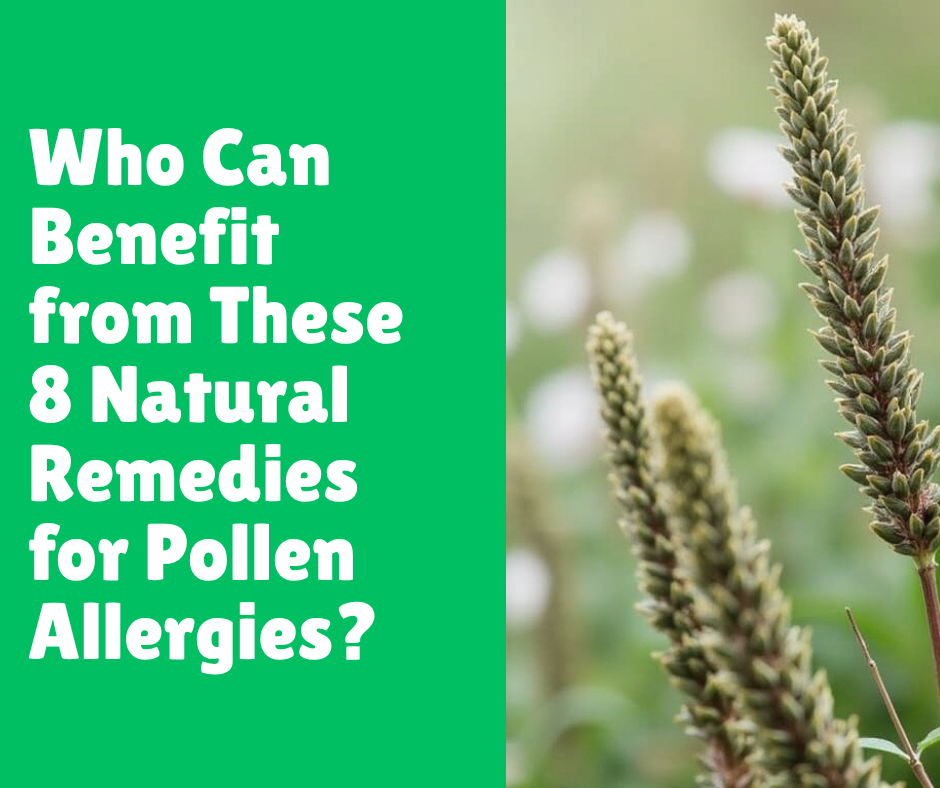
Who Can Benefit from These 8 Natural Remedies for Pollen Allergies?
Post Disclaimer
Content on this site is for educational use only and not a substitute for medical advice. Herbal remedies are based on traditional knowledge and not medical recommendations. Please consult a healthcare professional before trying any herb. We do not assume responsibility for any outcomes or adverse effects resulting from the use of information provided here.
Ah, springtime. The days get longer, the flowers bloom, and the weather is perfect for outdoor adventures. But if you suffer from pollen allergies, it’s also the season when sneezing, itchy eyes, and congestion become a daily struggle.
If you’re like many others who find themselves reaching for over-the-counter antihistamines or nasal sprays, you might be wondering if there’s a more natural approach to ease those symptoms.
Good news: there are several natural remedies that can help you combat pollen allergies without relying on pharmaceuticals.
In this post, I’ll walk you through eight effective, natural ways to manage your pollen allergies, so you can enjoy the outdoors without the constant discomfort.
1. Honey: The Sweet Solution to Seasonal Allergies
It might seem like just a tasty treat, but honey, particularly local raw honey, is one of the most talked-about natural remedies for pollen allergies.
The theory is that local honey contains trace amounts of pollen, which, when consumed in small doses over time, can help desensitize your immune system. Think of it like building up your body’s tolerance, much like getting a vaccine, but in a more natural form.
How to Use It:
- Step 1: Find raw honey from a local farmer’s market or a health food store. Make sure it’s local to your area to ensure it contains the pollen that’s causing your allergies.
- Step 2: Start by taking one teaspoon of honey a day, ideally about a month before allergy season kicks into full gear. This gives your body time to adapt to the local allergens.
- Step 3: Gradually increase your dosage to one tablespoon a day if you feel comfortable.
Why it works: The idea is that the pollen in the honey can help train your immune system to recognize and tolerate pollen more effectively. Many allergy sufferers have reported relief after consistently using honey.
2. Nasal Irrigation: Rinsing Away Allergens
One of the simplest and most effective ways to reduce pollen-related symptoms is nasal irrigation. This involves rinsing your nasal passages with a saline solution to clear out the pollen, dust, and other irritants. It’s like hitting the reset button for your sinuses.
How to Use It:
- Step 1: Buy a neti pot or a saline spray from a pharmacy or online.
- Step 2: Fill the device with a saline solution (you can easily make this at home with water and salt).
- Step 3: Lean over a sink and gently pour the saline solution into one nostril, letting it flow through and out the other nostril. Do the same for the other side.
Why it works: Nasal irrigation can help flush out pollen before it has a chance to settle in your sinuses and trigger an allergic reaction. It’s a quick and effective way to relieve congestion, reduce mucus, and promote clear airways.
3. Quercetin: The Natural Antihistamine
Quercetin is a powerful antioxidant found in foods like onions, apples, and berries. It has natural antihistamine properties, meaning it helps block the release of histamines, which are responsible for causing allergy symptoms like itching and swelling.
How to Use It:
- Step 1: Add more quercetin-rich foods to your diet. Consider incorporating apples, onions, and citrus fruits into your daily meals.
- Step 2: You can also take quercetin supplements if you prefer a more concentrated form, typically around 500 mg once or twice a day.
Why it works: By stabilizing mast cells (which release histamines), quercetin can help reduce the severity of allergic reactions. It’s a safe and natural alternative to antihistamine medications.
4. Essential Oils: Breathing Easy
Essential oils like eucalyptus, peppermint, and lavender are known for their ability to relieve allergy symptoms. They work by reducing inflammation, opening up airways, and soothing irritated sinuses.
They can be used in a variety of ways, including aromatherapy, steam inhalation, or topical application.
How to Use It:
- Step 1: Add a few drops of essential oil to a diffuser to breathe in the therapeutic benefits throughout the day.
- Step 2: For steam inhalation, place a few drops of essential oil into a bowl of hot water, then cover your head with a towel and inhale the steam.
- Step 3: You can also mix essential oils with a carrier oil (like coconut oil) and apply them topically to areas like your chest or sinuses.
Why it works: These oils can help open nasal passages, reduce inflammation in the airways, and soothe irritated skin around your eyes and nose.
5. Stinging Nettle: Nature’s Antihistamine
While the name might sound a little intimidating, stinging nettle is an incredibly effective herb when it comes to treating allergies. It acts as a natural antihistamine, which can help reduce sneezing, itching, and other common allergic symptoms.
How to Use It:
- Step 1: You can find stinging nettle in supplement form, either as capsules or as a dried herb.
- Step 2: Take the recommended dosage of stinging nettle supplements (usually around 300 mg, up to three times a day) to help reduce symptoms.
- Step 3: If you prefer a tea, steep dried nettle leaves in hot water for 5–10 minutes.
Why it works: Stinging nettle blocks the body’s production of histamine, helping to reduce the intensity of allergy symptoms. It’s been used for centuries to treat various health conditions, including allergies.
6. Vitamin C: Boost Your Immune System
Vitamin C is one of the most potent antioxidants out there, and it’s great for reducing the severity of allergic reactions. It helps reduce the amount of histamine in your body, thus minimizing the allergic response. Plus, it’s great for your overall immune system.
How to Use It:
- Step 1: Start by eating more vitamin C-rich foods like oranges, strawberries, bell peppers, and broccoli.
- Step 2: If needed, take vitamin C supplements, typically around 500 mg to 1,000 mg per day, especially during allergy season.
Why it works: Vitamin C helps stabilize mast cells (which release histamine) and boosts your immune system, helping you fend off allergic reactions.
7. Probiotics: The Gut-Immune System Connection
Probiotics are beneficial bacteria that can help support your immune system. Research shows that maintaining a healthy balance of gut bacteria can reduce the severity of allergy symptoms by helping your immune system respond more effectively to allergens.
How to Use It:
- Step 1: Start by adding probiotic-rich foods to your diet, such as yogurt, kefir, sauerkraut, or kimchi.
- Step 2: You can also take a high-quality probiotic supplement to ensure you’re getting enough of the beneficial bacteria.
Why it works: A healthy gut microbiome helps modulate your immune system, leading to fewer allergy flare-ups. By improving gut health, you can reduce your body’s hypersensitive response to pollen.
8. Local Plants and Herbs: Nature’s Allergy Fighters
Certain herbs, such as peppermint, ginger, and turmeric, have natural anti-inflammatory properties that can help reduce the severity of allergic reactions. These herbs are not only helpful in reducing symptoms but can also boost your overall immune function.
How to Use It:
- Step 1: Make herbal teas with ginger, peppermint, or turmeric. Add a little honey for added benefit.
- Step 2: You can also incorporate these herbs into your meals or use them in capsule form.
Why it works: These herbs have been used for centuries for their anti-inflammatory and immune-boosting properties. They help reduce inflammation in the sinuses and airways, easing symptoms of pollen allergies.
Common Mistakes to Avoid
Even though these natural remedies can provide relief, there are a few common mistakes I’ve seen allergy sufferers make when trying them out.
- Not starting early enough: Many of these remedies work best when started before allergy season begins. If you wait until your symptoms are in full swing, it might take longer to notice any effects.
- Relying solely on one remedy: Natural remedies can be more effective when used in combination. For example, try pairing nasal irrigation with local honey and probiotics for a comprehensive approach.
- Using low-quality products: Not all honey or supplements are created equal. Always go for high-quality, organic, or locally sourced products to ensure you’re getting the best results.
Conclusion
Pollen allergies don’t have to rule your life. By incorporating these eight natural remedies into your routine, you can help reduce the severity of your symptoms and find relief from the constant sneezing, itchy eyes, and congestion.
From local honey and nasal irrigation to probiotics and herbal teas, there are plenty of options to explore.
Remember, what works for one person might not work for another, so don’t hesitate to experiment with different remedies to find what works best for you.
- Start early to build up a tolerance to allergens.
- Combine multiple remedies for more effective results.
- Always opt for high-quality, natural products.
If you’ve tried any of these remedies, I’d love to hear about your experience! Or, if you have any other natural remedies that have worked for you, share them in the comments. Let’s help each other breathe easier this allergy season!
FAQs
How long does it take for honey to work on pollen allergies?
You might start seeing improvements after about a month of consistent use. The key is to start early in the season so your body has time to adapt.
Can I use nasal irrigation every day?
Yes, you can. Many people use it daily during allergy season to keep their nasal passages clear.
Are there any side effects of taking stinging nettle?
Stinging nettle is generally safe for most people, but if you’re pregnant or have certain health conditions, it’s always best to consult with a healthcare provider before using it.